Introduction : WordPress Web Developer
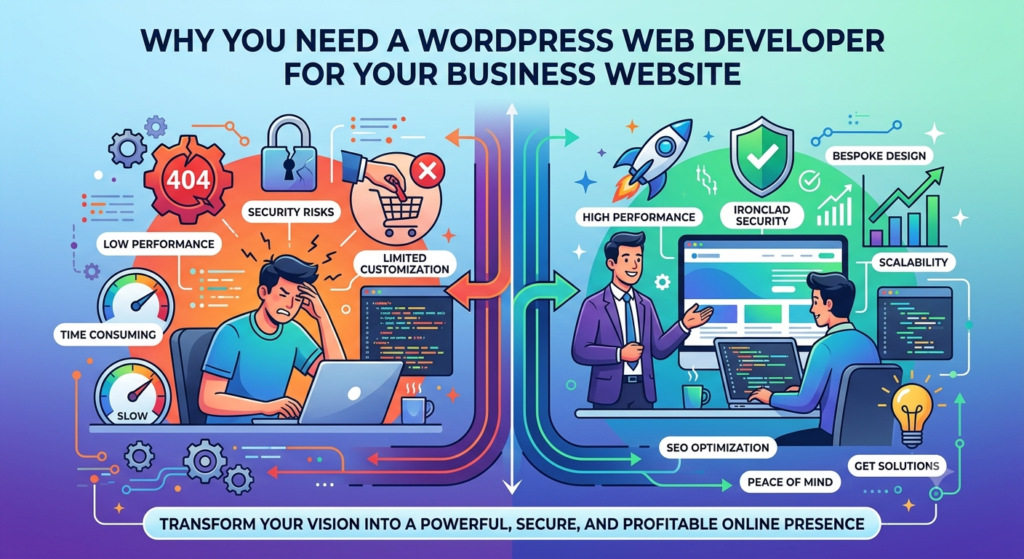
Table of Contents
In today’s digital-first world, a business website is much more than an online brochure. It acts as a sales representative, marketing platform, customer support channel, and brand identity all at once. Whether you run a startup, a small business, or an established enterprise, your website often creates the first impression potential customers have of your company. That first impression can determine whether a visitor becomes a customer or leaves your website within seconds.
While WordPress has made website creation accessible to everyone, building a professional business website requires much more than installing a theme and adding a few pages. Performance, security, search engine optimization (SEO), responsive design, user experience, accessibility, and scalability all play critical roles in a website’s success. This is where a WordPress Web Developer becomes an invaluable asset.

A professional WordPress Web Developer possesses the technical knowledge needed to create custom, secure, high-performing websites that align with business objectives. Unlike DIY website builders, professional development focuses on creating a website that grows alongside your business while delivering an exceptional experience to users across all devices.
In this comprehensive guide, you’ll learn why hiring a WordPress Web Developer is one of the smartest investments for your business, what responsibilities developers handle, the advantages they bring, and how they help businesses stay competitive in an increasingly digital marketplace.
Understanding the Role of a WordPress Web Developer
Before discussing the benefits, it’s important to understand what a WordPress Web Developer actually does.
A WordPress Web Developer specializes in designing, developing, customizing, optimizing, and maintaining websites built on WordPress. Their expertise extends beyond simply installing themes or plugins. They work with PHP, HTML, CSS, JavaScript, MySQL, REST APIs, Gutenberg blocks, custom themes, custom plugins, and performance optimization techniques to deliver tailored web solutions.
Their work often includes:
Custom WordPress theme development
Plugin customization and development
WooCommerce development
Website security implementation
Performance optimization
Technical SEO improvements
Responsive web development
Database optimization
API integrations
Ongoing maintenance and updates
Unlike beginners who rely solely on drag-and-drop builders, experienced developers understand how WordPress functions behind the scenes. This allows them to create cleaner code, improve website speed, reduce unnecessary dependencies, and build scalable websites that remain easy to maintain.
Why WordPress Powers Millions of Business Websites
WordPress is the world’s most widely used Content Management System (CMS), powering over 40% of websites on the internet. Its popularity stems from its flexibility, ease of use, and extensive ecosystem of themes, plugins, and developer resources.
Some of the biggest reasons businesses choose WordPress include:
Open-source architecture
Highly customizable
SEO-friendly foundation
Strong community support
Thousands of plugins
Flexible design capabilities
E-commerce compatibility
Regular updates
Scalable infrastructure
Because WordPress is open source, developers can customize virtually every aspect of a website without being restricted by proprietary platforms.
For official documentation and development resources, refer to WordPress.org.
Why DIY Website Builders Often Fall Short
Many businesses initially attempt to build websites using page builders or all-in-one website platforms. While these tools are suitable for simple projects, they often create long-term limitations.
Common problems include:
Limited Customization
Templates can only be modified within predefined limits. As businesses grow, these limitations become more noticeable.
Slower Performance
Many visual builders load excessive scripts and styles, increasing page load times.
Plugin Conflicts
Improper plugin installation frequently results in compatibility issues.
Security Risks
Poorly maintained websites become vulnerable to malware and cyberattacks.
Difficult Scalability
Adding advanced features later often requires rebuilding large portions of the website.
Hiring a professional WordPress Web Developer eliminates these challenges by creating a custom foundation built specifically for your business.
A WordPress Web Developer Builds Websites Around Business Goals
Every successful website begins with strategy.
Rather than focusing solely on design, a professional developer considers:
Business objectives
Target audience
Customer journey
Conversion optimization
Lead generation
Website performance
Search engine visibility
Instead of simply asking, “What should the homepage look like?” a developer asks:
What actions should visitors take?
How can navigation be simplified?
Which pages generate leads?
How can page speed improve conversions?
How should content support SEO?
This strategic approach transforms a website from a digital brochure into a business growth tool.
Better Website Performance Improves User Experience
Website speed has become one of the most important ranking and user experience factors.
Studies consistently show that users abandon slow websites within a few seconds. Faster websites also tend to achieve:
Higher engagement
Lower bounce rates
Better conversion rates
Increased search visibility
Improved customer satisfaction
A skilled WordPress Web Developer optimizes performance by:
Image Optimization
Large images are compressed without noticeable quality loss.
Efficient Code
Developers remove unnecessary CSS, JavaScript, and redundant plugins.
Caching Configuration
Proper caching dramatically reduces server response times.
Database Optimization
Old revisions, spam comments, transient data, and unused tables are cleaned regularly.
Lazy Loading
Images and videos load only when users scroll to them.
CDN Integration
Content Delivery Networks distribute assets across global servers for faster delivery.
Google also provides performance recommendations through Google PageSpeed Insights:
https://pagespeed.web.dev/
Security Is Never Optional
Cybersecurity threats continue to grow every year.
Business websites commonly face:
Brute-force login attempts
Malware infections
SQL injection
Cross-site scripting (XSS)
Plugin vulnerabilities
Outdated software exploits
A professional WordPress Web Developer takes proactive measures to secure websites.
These include:
Secure Hosting Configuration
Reliable hosting provides the first layer of protection.
SSL Certificates
HTTPS encrypts communication between users and the server.
Regular Updates
Core files, plugins, and themes remain updated to eliminate known vulnerabilities.
Firewall Protection
Web application firewalls block suspicious traffic before it reaches the website.
Backup Systems
Automated backups ensure rapid recovery after unexpected incidents.
Secure User Permissions
Developers assign appropriate user roles to minimize security risks.
Security best practices are also documented by the official WordPress project:
https://wordpress.org/documentation/
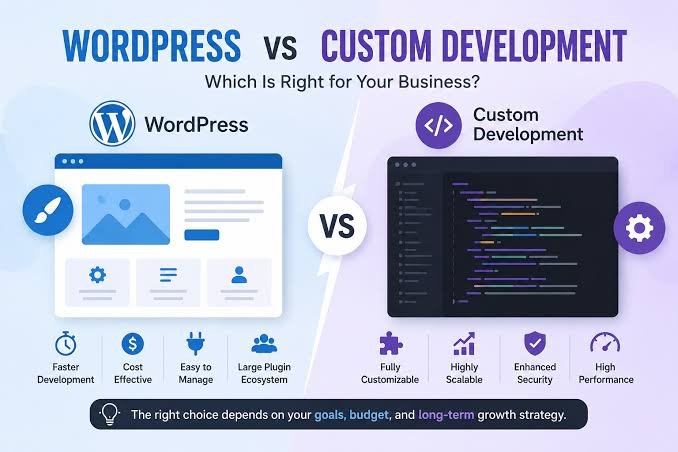
Custom Development Gives Businesses a Competitive Edge
Every business operates differently.
Generic templates cannot always support unique workflows.
A professional WordPress Web Developer builds custom functionality such as:
Customer dashboards
Booking systems
Membership portals
Custom forms
Learning management systems
Event management
Inventory systems
API integrations
CRM connections
ERP integrations
Instead of adapting business processes to software limitations, custom development adapts the website to the business.
SEO Starts with Proper Development
Many people believe SEO only involves writing blog posts and adding keywords.
In reality, technical SEO begins during website development.
A professional WordPress Web Developer ensures:
Clean HTML structure
Proper heading hierarchy
Fast loading pages
Mobile responsiveness
Optimized Core Web Vitals
Structured data implementation
XML sitemaps
Canonical URLs
Secure HTTPS implementation
Crawlable navigation
For Google’s official SEO documentation, developers can refer to Google Search Central:
https://developers.google.com/searchResponsive Web Development for Every Device
Modern users access websites through smartphones, tablets, laptops, desktops, smart TVs, and even wearable devices. A business website that looks perfect on a desktop but breaks on a mobile phone creates a poor user experience and can negatively affect conversions. Since Google primarily uses mobile-first indexing, mobile usability also plays a significant role in search rankings.
A professional WordPress Web Developer follows a mobile-first development approach to ensure that every page adapts seamlessly to different screen sizes and resolutions. Rather than simply shrinking desktop content to fit a smaller display, developers create layouts that prioritize usability, readability, and touch-friendly navigation.
Responsive development includes flexible grids, scalable typography, optimized images, intuitive navigation menus, and interactive elements that work well with touchscreens. These improvements ensure visitors can browse products, read blog posts, fill out contact forms, and complete purchases without frustration.
By delivering a consistent experience across devices, a WordPress Web Developer helps businesses improve engagement, reduce bounce rates, and increase customer satisfaction.

Custom WordPress Theme Development
Thousands of WordPress themes are available, but most are designed for a broad audience rather than the unique needs of a specific business. While premium themes offer convenience, they often include unnecessary features and bulky code that can slow down a website.
A professional WordPress Web Developer creates custom themes tailored to a company’s branding, functionality, and long-term goals. Instead of adapting a business to fit a template, the developer builds a solution around the business itself.
Benefits of custom theme development include:
Lightweight and optimized code
Unique branding and design
Better website performance
Easier maintenance
Improved security
Greater flexibility for future updates
Enhanced SEO structure
Custom themes also provide complete control over layouts, templates, and functionality, ensuring the website remains distinctive and aligned with business objectives.
Plugin Development and Custom Functionality
WordPress plugins extend the capabilities of a website, allowing businesses to add features without rebuilding the entire system. However, installing too many third-party plugins can introduce security vulnerabilities, compatibility issues, and slower performance.
A skilled WordPress Web Developer evaluates existing plugins carefully and develops custom plugins when needed. Custom plugin development provides functionality that matches business requirements without adding unnecessary code.
Examples include:
Customer Management Systems
Businesses can manage customer information, enquiries, and communication through custom-built dashboards integrated into WordPress.
Booking and Appointment Systems
Healthcare providers, consultants, fitness trainers, and service businesses often require tailored booking systems that integrate with calendars and payment gateways.
Membership Platforms
Developers can build secure membership portals with role-based access, subscription management, and exclusive content.
Learning Management Systems
Educational institutions and training providers benefit from customized online learning environments with quizzes, certificates, and progress tracking.
Business Automation
Custom plugins can connect WordPress with accounting software, CRM platforms, inventory systems, email marketing tools, and payment gateways, streamlining business operations.
WooCommerce Development for Online Stores
WooCommerce is the leading eCommerce solution for WordPress, enabling businesses to sell physical products, digital downloads, subscriptions, and services online.
While installing WooCommerce is straightforward, building a successful online store requires technical expertise. A WordPress Web Developer customizes WooCommerce to create a secure, fast, and user-friendly shopping experience.
Key development tasks include:
Product Catalogue Optimisation
Developers organise products using logical categories, filters, and search functionality, making it easier for customers to find what they need.
Checkout Optimisation
A simplified checkout process reduces cart abandonment and improves conversion rates. Developers optimise forms, payment gateways, and order confirmations to minimise friction.
Payment Gateway Integration
Businesses often require support for multiple payment methods. Developers integrate secure payment gateways such as Stripe, PayPal, and local payment providers while ensuring compliance with industry standards.
Shipping Configuration
Custom shipping rules, delivery zones, real-time shipping calculations, and order tracking improve the customer experience and operational efficiency.
Performance Optimisation
Large online stores often experience slower loading times due to product images and database growth. Developers implement caching, image compression, and database optimisation to maintain excellent performance.Large online stores often experience slower loading times due to product images and database growth. A WordPress Web Developer implements caching, image compression, and database optimisation to maintain excellent performance. If you want to learn more about improving your site’s speed, read our WordPress Speed Optimization Guide.
Official WooCommerce documentation is available at:
https://woocommerce.com/documentation/
Website Accessibility Matters
A professional business website should be accessible to all users, including those with disabilities. Accessibility is not only an ethical responsibility but can also support legal compliance in many regions.
A WordPress Web Developer incorporates accessibility best practices throughout the development process.
Important considerations include:
Proper semantic HTML structure
Keyboard-friendly navigation
Sufficient colour contrast
Alternative text for images
Descriptive link text
Accessible form labels
Screen reader compatibility
Logical heading hierarchy
Following accessibility standards improves usability for everyone, not just users with disabilities.
Developers can reference accessibility guidelines from the W3C Web Accessibility Initiative:
https://www.w3.org/WAI/
Scalability for Future Business Growth
Many businesses launch with a simple website but later require additional features such as online booking, multilingual support, customer portals, or advanced analytics. A website built without scalability in mind can become difficult and expensive to upgrade.
A WordPress Web Developer plans for future growth by building a flexible architecture from the start.
Scalable development includes:
Modular code structure
Expandable database design
Reusable templates
API-ready architecture
Cloud hosting compatibility
Optimised server configuration
Efficient caching strategies
This approach allows businesses to add new functionality without rebuilding the entire website, saving time and development costs.
Integration with Third-Party Services
Businesses rely on multiple digital tools to manage daily operations. A modern website often needs to connect with external platforms to automate workflows and improve efficiency.
A WordPress Web Developer integrates WordPress with services such as:
Customer Relationship Management (CRM) systems
Email marketing platforms
Payment processors
Live chat applications
Inventory management software
Accounting systems
Marketing automation tools
Social media platforms
Analytics services
Cloud storage solutions
These integrations reduce manual work, minimise errors, and create a smoother experience for both businesses and customers.
Ongoing Maintenance Keeps Your Website Healthy
Launching a website is only the beginning. Without regular maintenance, performance, security, and compatibility issues can gradually affect the user experience.
A professional WordPress Web Developer provides ongoing maintenance to keep the website running efficiently.
Maintenance typically includes:
Updating the WordPress core
Updating themes and plugins
Monitoring website uptime
Performing security scans
Optimising the database
Creating regular backups
Fixing compatibility issues
Reviewing website performance
Monitoring broken links
Improving page speed
Regular maintenance reduces the risk of downtime and ensures the website continues to support business objectives.
Improved Website Performance Supports SEO
Search engines favour websites that load quickly, function reliably, and provide a positive user experience. Performance optimisation is therefore a key part of technical SEO.
A WordPress Web Developer focuses on several optimisation techniques, including:
Minifying CSS, JavaScript, and HTML
Enabling browser caching
Compressing images using modern formats
Reducing HTTP requests
Optimising fonts
Implementing lazy loading
Using a Content Delivery Network (CDN)
Cleaning unnecessary database records
Removing unused plugins and scripts
These improvements help websites achieve better Core Web Vitals scores, which contribute to stronger search visibility and a smoother browsing experience.Technical SEO Begins with Professional Development
Many businesses invest heavily in content marketing but overlook the technical foundation of their website. Even the best content may struggle to rank if search engines cannot efficiently crawl, understand, and index the website. This is why technical SEO is one of the most valuable contributions a WordPress Web Developer makes to a business website.
Unlike content SEO, technical SEO focuses on improving the website’s infrastructure. A developer ensures that search engines can access pages quickly, understand the site’s structure, and deliver the best possible user experience.
Clean and Semantic Code
Search engines prefer websites built with clean, semantic HTML. A professional WordPress Web Developer uses proper HTML5 elements such as , , , , , and to organise content logically. This not only improves accessibility but also helps search engines interpret page content more effectively.
Optimised URL Structure
SEO-friendly URLs are concise, descriptive, and easy for both users and search engines to understand. Rather than using automatically generated URLs filled with numbers or unnecessary parameters, a developer creates meaningful permalink structures that improve readability and indexing.
For example:
Good URL
example.com/wordpress-web-developer
Poor URL
example.com/?p=5678
XML Sitemaps
XML sitemaps help search engines discover new and updated content. A WordPress Web Developer ensures the sitemap is automatically generated and regularly updated so that important pages are indexed efficiently.
Robots.txt Configuration
The robots.txt file guides search engine crawlers by indicating which sections of the website should or should not be indexed. Proper configuration prevents duplicate content and protects sensitive areas from unnecessary crawling.
Canonical URLs
Duplicate content can confuse search engines and dilute ranking signals. Developers implement canonical tags to indicate the preferred version of a page, helping preserve SEO value.
Schema Markup Improves Search Visibility
Schema markup provides structured data that helps search engines understand the content of a webpage. A WordPress Web Developer can implement schema using JSON-LD, enabling enhanced search results such as:
Star ratings
FAQs
Breadcrumbs
Products
Articles
Events
Business information
Reviews
Rich results increase visibility in search engine results pages (SERPs) and often improve click-through rates.
Google’s structured data guidelines can be found at:
https://developers.google.com/search/docs/appearance/structured-data
Core Web Vitals and User Experience
Google’s Core Web Vitals measure real-world user experience. A professional WordPress Web Developer focuses on improving these performance metrics because they influence both SEO and visitor satisfaction.
Key metrics include:
Largest Contentful Paint (LCP)
Measures how quickly the main content of a page becomes visible. Faster loading pages improve user engagement.
Interaction to Next Paint (INP)
Evaluates how responsive a website feels when users interact with buttons, menus, and forms.
Cumulative Layout Shift (CLS)
Measures visual stability. Unexpected movement of page elements can frustrate visitors and reduce trust.
By optimising these metrics, developers create websites that are both search-engine friendly and enjoyable to use.
API Integrations Expand Business Capabilities
Modern businesses rarely rely on a single platform. Websites often need to exchange information with external systems. A WordPress Web Developer uses APIs (Application Programming Interfaces) to connect WordPress with other software and services.
Examples include:
CRM Integration
Automatically send enquiries from WordPress forms into CRM platforms such as Salesforce or HubSpot.
Email Marketing
Connect contact forms with platforms like Mailchimp or Brevo to build subscriber lists automatically.
Payment Processing
Securely process payments using trusted gateways without disrupting the user experience.
Inventory Synchronisation
Synchronise stock levels between the website and inventory management software to avoid overselling.
Customer Support Systems
Integrate live chat, help desks, or ticketing platforms to provide efficient customer support.
These integrations reduce manual work, improve accuracy, and enhance overall business efficiency.
Website Security Requires Continuous Attention
Security is not a one-time task but an ongoing responsibility. Cyber threats evolve constantly, making proactive protection essential.
A WordPress Web Developer implements multiple layers of security to safeguard business data, customer information, and website functionality.
Secure Authentication
Developers strengthen login systems by:
Enabling two-factor authentication (2FA)
Limiting login attempts
Using strong password policies
Restricting administrator access
Regular Software Updates
Keeping WordPress core files, themes, and plugins updated reduces exposure to known vulnerabilities.
Malware Protection
Security plugins and server-side monitoring help detect and remove malicious code before it causes significant damage.
Firewall Configuration
Web Application Firewalls (WAFs) filter harmful traffic before it reaches the website.
Automated Backups
Regular backups allow businesses to recover quickly in case of hacking, accidental deletion, or server failure.
Website Maintenance Is an Ongoing Investment
Launching a website is only the beginning. Continuous maintenance ensures long-term stability, security, and performance.
A WordPress Web Developer typically performs routine tasks such as:
Performance Monitoring
Monitoring page speed, server response times, and resource usage helps identify issues before they affect visitors.
Plugin Compatibility
As WordPress evolves, plugins require updates to remain compatible. Developers test updates carefully to avoid conflicts.
Database Optimisation
Cleaning unnecessary revisions, spam comments, expired transients, and unused tables improves performance.
Broken Link Monitoring
Fixing broken links improves both user experience and SEO.
Security Audits
Regular vulnerability scans help identify and resolve security risks before attackers can exploit them.
Common Mistakes Businesses Make When Hiring a WordPress Web Developer
Hiring the right WordPress Web Developer can significantly impact the success of your project. Unfortunately, many businesses focus solely on price rather than expertise and long-term value.
Choosing the Cheapest Option
Low-cost development may appear attractive initially, but poor coding practices often lead to expensive fixes, slow performance, and security issues later.
Ignoring Previous Work
Always review a developer’s portfolio to assess design quality, functionality, and technical expertise.
Overlooking Communication Skills
A skilled developer should communicate clearly, explain technical concepts in simple terms, and provide regular project updates.
Not Discussing Maintenance
Many businesses assume the project ends after launch. Clarify whether ongoing maintenance, backups, updates, and support are included.
Focusing Only on Design
A visually appealing website is important, but performance, security, SEO, and scalability are equally critical.
Business Benefits of Hiring a WordPress Web Developer
Investing in a professional WordPress Web Developer provides measurable business advantages that extend beyond aesthetics.
Some of the most significant benefits include:
Increased Website Speed
Fast-loading pages improve user satisfaction and conversion rates.
Better Search Engine Rankings
Technical optimisation supports stronger visibility in search results.
Enhanced Security
Professional security measures reduce the risk of cyberattacks and data breaches.
Higher Conversion Rates
Well-designed user journeys encourage visitors to complete desired actions, whether making a purchase or submitting an enquiry.
Improved Brand Credibility
A polished, reliable website strengthens trust and reinforces a professional image.
Scalability
As the business grows, the website can evolve without requiring a complete rebuild.
Reduced Long-Term Costs
Quality development minimises future maintenance expenses and prevents costly technical issues.
Return on Investment (ROI)
Although hiring a WordPress Web Developer requires an initial investment, the long-term returns often outweigh the upfront cost.
A professionally developed website can generate value through:
Increased organic traffic
More qualified leads
Higher sales conversions
Lower maintenance costs
Improved customer retention
Greater operational efficiency
Enhanced online reputation
Rather than viewing professional development as an expense, businesses should see it as a strategic investment that supports sustainable growth.Advanced WordPress Development for Modern Businesses
As businesses expand, their websites often require features that go beyond standard themes and plugins. A professional WordPress Web Developer possesses the technical expertise to build advanced solutions that improve efficiency, scalability, and user experience. These solutions are tailored to specific business needs rather than relying on generic functionality.
Modern WordPress development focuses on creating websites that are secure, fast, easy to manage, and capable of supporting future growth. Whether it’s integrating external applications, building custom dashboards, or developing enterprise-level solutions, a skilled developer ensures that the website evolves alongside the business.
Headless WordPress Development
One of the latest trends in web development is Headless WordPress. In this architecture, WordPress serves as the content management system (CMS), while the front end is built using modern JavaScript frameworks such as React, Vue.js, or Next.js.
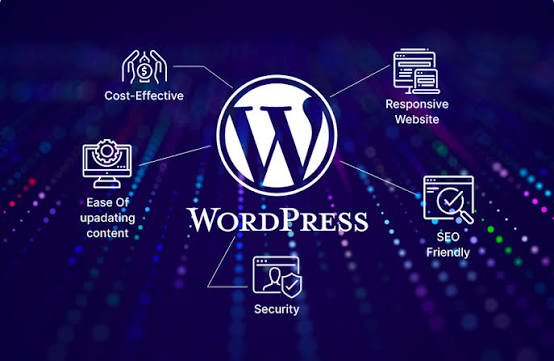
A WordPress Web Developer can implement a headless setup when businesses require:
Faster page loading
Greater flexibility in front-end design
Progressive Web Applications (PWAs)
Mobile app integration
Omnichannel content delivery
Enhanced scalability
Although headless WordPress is not necessary for every project, it provides exceptional performance and flexibility for large-scale applications and high-traffic websites.
Gutenberg Block Development
The WordPress Block Editor (Gutenberg) has transformed how content is created and managed. While the default blocks cover many basic needs, businesses often require custom blocks tailored to their workflows.
A WordPress Web Developer can build custom Gutenberg blocks for:
Testimonials
Display customer testimonials with customised layouts and styling.
Pricing Tables
Create reusable pricing sections that marketing teams can update without touching code.
Service Listings
Showcase business services with icons, descriptions, and call-to-action buttons.
Team Members
Present employee profiles with images, biographies, and social media links.
FAQs
Build collapsible FAQ sections that improve user experience while supporting SEO.
Custom blocks simplify content management and maintain design consistency across the website.
Custom Plugin Architecture
Instead of relying on numerous third-party plugins, experienced developers often create custom plugins that include only the functionality a business requires.
Advantages include:
Improved performance
Better security
Easier maintenance
Reduced compatibility issues
Greater control over features
Simplified future updates
A well-structured plugin architecture ensures that custom functionality remains independent of the active theme, making future redesigns much easier.
Enterprise WordPress Solutions
Large organisations require websites capable of handling high traffic, multiple user roles, complex integrations, and extensive content libraries.
A WordPress Web Developer builds enterprise solutions that support:
Multi-site networks
Role-based user permissions
Content approval workflows
High-performance hosting environments
Large databases
API-driven architectures
Global content delivery
Advanced security policies
These enterprise capabilities allow businesses to manage multiple websites efficiently while maintaining consistent branding and governance.
Database Optimisation
The WordPress database stores posts, pages, settings, comments, user accounts, and plugin data. Over time, unnecessary information accumulates, affecting website performance.
A WordPress Web Developer regularly optimises the database by:
Removing Post Revisions
Old revisions consume storage and increase database size.
Cleaning Expired Transients
Temporary cached data that is no longer needed is removed.
Deleting Spam Comments
Eliminating spam reduces clutter and improves efficiency.
Optimising Database Tables
Routine optimisation enhances query performance and reduces server load.
A clean database contributes to faster page loading and a smoother user experience.
Performance Monitoring and Analytics
Continuous monitoring allows businesses to identify opportunities for improvement. A WordPress Web Developer integrates analytics and monitoring tools to track website health and user behaviour.
Common metrics include:
Organic traffic
Bounce rate
Conversion rate
Page load speed
User engagement
Form submissions
Sales performance
Error reports
Server uptime
By analysing these insights, developers can make informed improvements that support business growth.
The Importance of Code Quality
High-quality code forms the foundation of every successful website. Poorly written code can lead to slow performance, security vulnerabilities, and maintenance challenges.
A professional WordPress Web Developer follows recognised coding standards by:
Writing clean, readable code
Using proper documentation
Following WordPress Coding Standards
Avoiding unnecessary complexity
Reusing components efficiently
Performing regular code reviews
Well-written code ensures that future developers can maintain and expand the website without unnecessary complications.
Developers can reference the official coding standards at:
Version Control with Git
Professional development teams use Git to manage source code efficiently.
Version control provides several advantages:
Tracks every code change
Supports collaboration
Allows quick rollback of errors
Simplifies deployment
Protects project history
A WordPress Web Developer typically uses Git alongside platforms such as GitHub or GitLab to maintain organised and reliable development workflows.
Learn more about Git at:
Testing Before Deployment
Launching untested code can introduce bugs that negatively impact users and business operations.
A professional WordPress Web Developer performs several types of testing before deployment, including:
Functional Testing
Ensures all website features work as expected.
Responsive Testing
Verifies layouts across desktops, tablets, and smartphones.
Browser Compatibility Testing
Checks functionality in Chrome, Firefox, Safari, Edge, and other major browsers.
Performance Testing
Measures loading speed and server response under different conditions.
Security Testing
Identifies vulnerabilities before the website goes live.
Thorough testing significantly reduces the likelihood of post-launch issues.
Future Trends in WordPress Development
WordPress continues to evolve rapidly, introducing new technologies that shape the future of web development. Staying updated with these trends enables businesses to remain competitive.
Emerging trends include:
Artificial Intelligence Integration
AI-powered chatbots, personalised recommendations, automated content generation, and intelligent search are becoming increasingly common.
Voice Search Optimisation
As voice assistants gain popularity, websites are adapting their content and structure to support conversational search queries.
Progressive Web Applications (PWAs)
PWAs provide app-like experiences within web browsers, improving speed, offline access, and user engagement.
Serverless Architectures
Some businesses are adopting serverless technologies to improve scalability and reduce infrastructure management.
Enhanced Security Technologies
Advanced authentication methods, automated threat detection, and stronger encryption continue to improve website security.
A knowledgeable WordPress Web Developer stays informed about these innovations and recommends solutions that align with business goals.
How to Choose the Right WordPress Web Developer
Selecting the right developer is one of the most important decisions for your online presence. Rather than focusing solely on price, businesses should evaluate technical expertise, communication, and long-term support.Selecting the right developer is one of the most important decisions for your online presence. Rather than focusing solely on price, businesses should evaluate technical expertise, communication, and long-term support. To understand the full value a professional can bring, explore our complete guide on why you need a WordPress Web Developer for your business website before making your decision.
When hiring a WordPress Web Developer, consider the following:
Review Their Portfolio
Look for projects that demonstrate technical skill, clean design, and relevant industry experience.
Ask About Their Development Process
A structured process typically includes planning, design, development, testing, deployment, and ongoing maintenance.
Evaluate Technical Skills
Ensure the developer is proficient in:
WordPress Core
PHP
HTML5
CSS3
JavaScript
MySQL
REST API
WooCommerce
Git
Performance optimisation
Discuss Maintenance Plans
Regular updates and security monitoring are essential for long-term success.
Read Client Testimonials
Positive feedback from previous clients provides valuable insight into professionalism and reliability.
Why Businesses Continue to Invest in Professional WordPress Development
Successful businesses understand that their website is a strategic asset rather than a one-time project.
Hiring an experienced WordPress Web Developer allows companies to:
Deliver better user experiences
Improve search engine rankings
Increase lead generation
Build customer trust
Support long-term scalability
Strengthen website security
Improve operational efficiency
Adapt quickly to changing market demands
A professionally developed WordPress website becomes a powerful platform for marketing, sales, and customer engagement, helping businesses achieve sustainable growth in an increasingly competitive digitalWhat does a WordPress Web Developer do?
A WordPress Web Developer designs, develops, customises, optimises, secures, and maintains WordPress websites. Their responsibilities include creating custom themes, developing plugins, improving website performance, implementing technical SEO, integrating third-party services, and ensuring the website remains secure and scalable.
Why should I hire a WordPress Web Developer instead of using a website builder?
Website builders are suitable for simple websites, but they often have limitations in customisation, performance, and scalability. A professional WordPress Web Developer creates a customised website that aligns with your business goals, improves user experience, enhances SEO, and supports future growth.
Is WordPress suitable for large businesses?
Yes. WordPress is highly scalable and powers websites for startups, SMEs, global brands, educational institutions, government organisations, and enterprise businesses. An experienced WordPress Web Developer can build enterprise-level solutions capable of handling millions of visitors while maintaining excellent performance.
Can a WordPress Web Developer improve my website’s SEO?
Absolutely. Technical SEO begins with proper website development. A WordPress Web Developer improves page speed, mobile responsiveness, structured data, internal architecture, XML sitemaps, clean URLs, Core Web Vitals, and security, all of which contribute to better search engine rankings.
How does a developer improve website security?
Security improvements typically include:
Installing SSL certificates
Configuring web application firewalls
Enabling two-factor authentication
Performing regular updates
Monitoring malware
Creating automated backups
Restricting administrator access
Strengthening login security
These practices significantly reduce the risk of cyberattacks.
What programming languages should a WordPress Web Developer know?
A professional WordPress Web Developer usually works with:
PHP
HTML5
CSS3
JavaScript
MySQL
SQL
REST API
JSON
Git
WP-CLI
Knowledge of frameworks such as React is increasingly valuable because of the Gutenberg Block Editor and headless WordPress development.
How important is website speed?
Website speed directly affects user experience, SEO rankings, conversion rates, and customer satisfaction. Slow websites often experience higher bounce rates and lower engagement. A skilled WordPress Web Developer optimises loading times through caching, code optimisation, image compression, database optimisation, and CDN integration.
How often should a WordPress website be updated?
WordPress Core, plugins, and themes should be updated regularly to maintain compatibility, improve performance, and protect against newly discovered security vulnerabilities. Ongoing maintenance ensures your website remains stable and secure.
Can a WordPress Web Developer build custom business solutions?
Yes. Developers create customised features based on specific business requirements, including:
Membership systems
Booking platforms
Customer dashboards
Learning management systems
CRM integrations
Payment gateways
Inventory management
Custom reporting tools
Business automation workflows
Is hiring a WordPress Web Developer a worthwhile investment?
Yes. Although professional development involves an upfront cost, it often delivers long-term value through improved website performance, stronger security, better SEO, increased conversions, easier maintenance, and greater scalability. For most businesses, the return on investment outweighs the initial expense.
Key Takeaways
Throughout this guide, we’ve explored why partnering with a WordPress Web Developer is one of the most effective ways to build a reliable and future-ready business website. A professional developer contributes far more than technical expertise—they create a digital platform that supports marketing, sales, customer engagement, and long-term business growth.
Some of the key benefits include:
Custom website development tailored to business needs.
Faster loading speeds and improved Core Web Vitals.
Strong technical SEO foundations.
Responsive design for all devices.
Enhanced website security.
Scalable architecture for future growth.
WooCommerce and eCommerce development.
API integrations with third-party business tools.
Ongoing maintenance and support.
Better user experience and higher conversion rates.
By investing in professional development, businesses gain a website that not only looks impressive but also performs consistently, adapts to changing requirements, and helps achieve measurable business outcomes.
Final Thoughts
Your website is one of the most valuable digital assets your business owns. It influences how customers perceive your brand, how search engines rank your content, and how effectively you convert visitors into clients.
While WordPress makes website creation accessible, building a high-performing business website requires expertise in design, development, optimisation, security, and long-term maintenance. That is precisely where a WordPress Web Developer adds significant value.
Whether you’re launching a new business website, redesigning an existing one, or expanding your online services, hiring a skilled developer ensures that your website is built on a strong technical foundation. From clean code and responsive layouts to technical SEO and advanced integrations, professional development supports sustainable growth and helps your business remain competitive in an evolving digital landscape.
Rather than viewing a WordPress Web Developer as an expense, think of them as a long-term technology partner who helps transform your website into a powerful business asset.
Call to Action
If you’re planning to build a new website or improve an existing one, now is the ideal time to work with an experienced WordPress Web Developer. A professionally developed website delivers better performance, stronger security, improved search visibility, and a superior user experience—all of which contribute to increased leads, sales, and customer satisfaction.
Evaluate your current website, identify areas for improvement, and invest in a solution that is designed to grow with your business. The right developer can help you create a website that not only meets today’s expectations but is also prepared for tomorrow’s opportunities.
Recommended External Dofollow Resources
Include these naturally throughout the article where relevant:
WordPress Official Documentation: https://wordpress.org/documentation/
WordPress Developer Resources: https://developer.wordpress.org/
Google Search Central: https://developers.google.com/search
Google PageSpeed Insights: https://pagespeed.web.dev/
W3C Web Accessibility Initiative: https://www.w3.org/WAI/
MDN Web Docs: https://developer.mozilla.org/
PHP Documentation: https://www.php.net/docs.php
WooCommerce Documentation: https://woocommerce.com/documentation/
Git Official Website: https://git-scm.com/
SEO Optimisation
Focus Keyword: WordPress Web Developer
SEO Title:
Why You Need a WordPress Web Developer for Your Business Website
URL Slug:
/wordpress-web-developer
Meta Description:
Discover why hiring a WordPress Web Developer is essential for creating a fast, secure, SEO-friendly, and scalable business website. Learn the benefits, best practices, and expert tips for long-term online success.
Suggested Images & Alt Text
Image Alt Text
Developer coding in WordPress WordPress Web Developer building a custom business website
Responsive website on devices Responsive WordPress website across desktop, tablet, and mobile
Website speed dashboard Website performance optimisation by a WordPress Web Developer
Website security illustration WordPress website security best practices
WooCommerce online store WooCommerce store developed by a WordPress Web Developer
SEO optimisation dashboard Technical SEO improvements on a WordPress business website
Website maintenance workflow Ongoing WordPress website maintenance and updates
Team collaborating on a website Professional WordPress Web Developer working with a business teamWhy You Need a WordPress Web Developer for Your Business Website
Introduction
In today’s digital-first world, a business website is much more than an online brochure. It acts as a sales representative, marketing platform, customer support channel, and brand identity all at once. Whether you run a startup, a small business, or an established enterprise, your website often creates the first impression potential customers have of your company. That first impression can determine whether a visitor becomes a customer or leaves your website within seconds.
While WordPress has made website creation accessible to everyone, building a professional business website requires much more than installing a theme and adding a few pages. Performance, security, search engine optimization (SEO), responsive design, user experience, accessibility, and scalability all play critical roles in a website’s success. This is where a WordPress Web Developer becomes an invaluable asset.
A professional WordPress Web Developer possesses the technical knowledge needed to create custom, secure, high-performing websites that align with business objectives. Unlike DIY website builders, professional development focuses on creating a website that grows alongside your business while delivering an exceptional experience to users across all devices.
In this comprehensive guide, you’ll learn why hiring a WordPress Web Developer is one of the smartest investments for your business, what responsibilities developers handle, the advantages they bring, and how they help businesses stay competitive in an increasingly digital marketplace.
Understanding the Role of a WordPress Web Developer
Before discussing the benefits, it’s important to understand what a WordPress Web Developer actually does.
A WordPress Web Developer specializes in designing, developing, customizing, optimizing, and maintaining websites built on WordPress. Their expertise extends beyond simply installing themes or plugins. They work with PHP, HTML, CSS, JavaScript, MySQL, REST APIs, Gutenberg blocks, custom themes, custom plugins, and performance optimization techniques to deliver tailored web solutions.
Their work often includes:
Custom WordPress theme development
Plugin customization and development
WooCommerce development
Website security implementation
Performance optimization
Technical SEO improvements
Responsive web development
Database optimization
API integrations
Ongoing maintenance and updates
Unlike beginners who rely solely on drag-and-drop builders, experienced developers understand how WordPress functions behind the scenes. This allows them to create cleaner code, improve website speed, reduce unnecessary dependencies, and build scalable websites that remain easy to maintain.
Why WordPress Powers Millions of Business Websites
WordPress is the world’s most widely used Content Management System (CMS), powering over 40% of websites on the internet. Its popularity stems from its flexibility, ease of use, and extensive ecosystem of themes, plugins, and developer resources.
Some of the biggest reasons businesses choose WordPress include:
Open-source architecture
Highly customizable
SEO-friendly foundation
Strong community support
Thousands of plugins
Flexible design capabilities
E-commerce compatibility
Regular updates
Scalable infrastructure
Because WordPress is open source, developers can customize virtually every aspect of a website without being restricted by proprietary platforms.
For official documentation and development resources, refer to WordPress.org.
Why DIY Website Builders Often Fall Short
Many businesses initially attempt to build websites using page builders or all-in-one website platforms. While these tools are suitable for simple projects, they often create long-term limitations.
Common problems include:
Limited Customization
Templates can only be modified within predefined limits. As businesses grow, these limitations become more noticeable.
Slower Performance
Many visual builders load excessive scripts and styles, increasing page load times.
Plugin Conflicts
Improper plugin installation frequently results in compatibility issues.
Security Risks
Poorly maintained websites become vulnerable to malware and cyberattacks.
Difficult Scalability
Adding advanced features later often requires rebuilding large portions of the website.
Hiring a professional WordPress Web Developer eliminates these challenges by creating a custom foundation built specifically for your business.
A WordPress Web Developer Builds Websites Around Business Goals
Every successful website begins with strategy.
Rather than focusing solely on design, a professional developer considers:
Business objectives
Target audience
Customer journey
Conversion optimization
Lead generation
Website performance
Search engine visibility
Instead of simply asking, “What should the homepage look like?” a developer asks:
What actions should visitors take?
How can navigation be simplified?
Which pages generate leads?
How can page speed improve conversions?
How should content support SEO?
This strategic approach transforms a website from a digital brochure into a business growth tool.
Better Website Performance Improves User Experience
Website speed has become one of the most important ranking and user experience factors.
Studies consistently show that users abandon slow websites within a few seconds. Faster websites also tend to achieve:
Higher engagement
Lower bounce rates
Better conversion rates
Increased search visibility
Improved customer satisfaction
A skilled WordPress Web Developer optimizes performance by:
Image Optimization
Large images are compressed without noticeable quality loss.
Efficient Code
Developers remove unnecessary CSS, JavaScript, and redundant plugins.
Caching Configuration
Proper caching dramatically reduces server response times.
Database Optimization
Old revisions, spam comments, transient data, and unused tables are cleaned regularly.
Lazy Loading
Images and videos load only when users scroll to them.
CDN Integration
Content Delivery Networks distribute assets across global servers for faster delivery.
Google also provides performance recommendations through Google PageSpeed Insights:
https://pagespeed.web.dev/
Security Is Never Optional
Cybersecurity threats continue to grow every year.
Business websites commonly face:
Brute-force login attempts
Malware infections
SQL injection
Cross-site scripting (XSS)
Plugin vulnerabilities
Outdated software exploits
A professional WordPress Web Developer takes proactive measures to secure websites.
These include:
Secure Hosting Configuration
Reliable hosting provides the first layer of protection.
SSL Certificates
HTTPS encrypts communication between users and the server.
Regular Updates
Core files, plugins, and themes remain updated to eliminate known vulnerabilities.
Firewall Protection
Web application firewalls block suspicious traffic before it reaches the website.
Backup Systems
Automated backups ensure rapid recovery after unexpected incidents.
Secure User Permissions
Developers assign appropriate user roles to minimize security risks.
Security best practices are also documented by the official WordPress project:
https://wordpress.org/documentation/
Custom Development Gives Businesses a Competitive Edge
Every business operates differently.
Generic templates cannot always support unique workflows.
A professional WordPress Web Developer builds custom functionality such as:
Customer dashboards
Booking systems
Membership portals
Custom forms
Learning management systems
Event management
Inventory systems
API integrations
CRM connections
ERP integrations
Instead of adapting business processes to software limitations, custom development adapts the website to the business.
SEO Starts with Proper Development
Many people believe SEO only involves writing blog posts and adding keywords.
In reality, technical SEO begins during website development.
A professional WordPress Web Developer ensures:
Clean HTML structure
Proper heading hierarchy
Fast loading pages
Mobile responsiveness
Optimized Core Web Vitals
Structured data implementation
XML sitemaps
Canonical URLs
Secure HTTPS implementation
Crawlable navigation
For Google’s official SEO documentation, developers can refer to Google Search Central:
https://developers.google.com/searchResponsive Web Development for Every Device
Modern users access websites through smartphones, tablets, laptops, desktops, smart TVs, and even wearable devices. A business website that looks perfect on a desktop but breaks on a mobile phone creates a poor user experience and can negatively affect conversions. Since Google primarily uses mobile-first indexing, mobile usability also plays a significant role in search rankings.
A professional WordPress Web Developer follows a mobile-first development approach to ensure that every page adapts seamlessly to different screen sizes and resolutions. Rather than simply shrinking desktop content to fit a smaller display, developers create layouts that prioritize usability, readability, and touch-friendly navigation.
Responsive development includes flexible grids, scalable typography, optimized images, intuitive navigation menus, and interactive elements that work well with touchscreens. These improvements ensure visitors can browse products, read blog posts, fill out contact forms, and complete purchases without frustration.
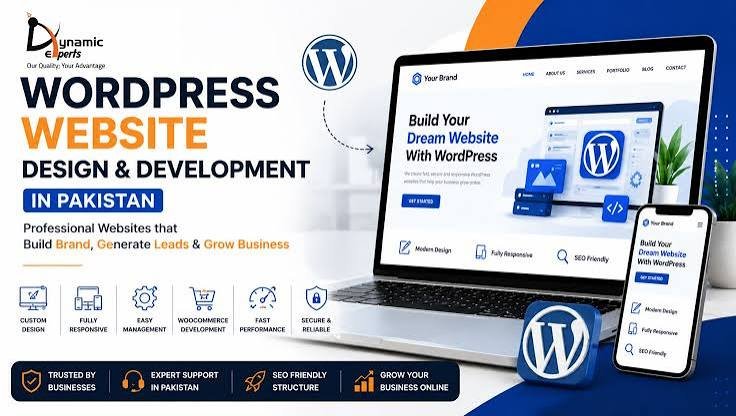
By delivering a consistent experience across devices, a WordPress Web Developer helps businesses improve engagement, reduce bounce rates, and increase customer satisfaction.
Custom WordPress Theme Development
Thousands of WordPress themes are available, but most are designed for a broad audience rather than the unique needs of a specific business. While premium themes offer convenience, they often include unnecessary features and bulky code that can slow down a website.
A professional WordPress Web Developer creates custom themes tailored to a company’s branding, functionality, and long-term goals. Instead of adapting a business to fit a template, the developer builds a solution around the business itself.
Benefits of custom theme development include:
Lightweight and optimized code
Unique branding and design
Better website performance
Easier maintenance
Improved security
Greater flexibility for future updates
Enhanced SEO structure
Custom themes also provide complete control over layouts, templates, and functionality, ensuring the website remains distinctive and aligned with business objectives.
Plugin Development and Custom Functionality
WordPress plugins extend the capabilities of a website, allowing businesses to add features without rebuilding the entire system. However, installing too many third-party plugins can introduce security vulnerabilities, compatibility issues, and slower performance.
A skilled WordPress Web Developer evaluates existing plugins carefully and develops custom plugins when needed. Custom plugin development provides functionality that matches business requirements without adding unnecessary code.
Examples include:
Customer Management Systems
Businesses can manage customer information, enquiries, and communication through custom-built dashboards integrated into WordPress.
Booking and Appointment Systems
Healthcare providers, consultants, fitness trainers, and service businesses often require tailored booking systems that integrate with calendars and payment gateways.
Membership Platforms
Developers can build secure membership portals with role-based access, subscription management, and exclusive content.
Learning Management Systems
Educational institutions and training providers benefit from customized online learning environments with quizzes, certificates, and progress tracking.
Business Automation
Custom plugins can connect WordPress with accounting software, CRM platforms, inventory systems, email marketing tools, and payment gateways, streamlining business operations.
WooCommerce Development for Online Stores
WooCommerce is the leading eCommerce solution for WordPress, enabling businesses to sell physical products, digital downloads, subscriptions, and services online.
While installing WooCommerce is straightforward, building a successful online store requires technical expertise. A WordPress Web Developer customizes WooCommerce to create a secure, fast, and user-friendly shopping experience.
Key development tasks include:
Product Catalogue Optimisation
Developers organise products using logical categories, filters, and search functionality, making it easier for customers to find what they need.
Checkout Optimisation
A simplified checkout process reduces cart abandonment and improves conversion rates. Developers optimise forms, payment gateways, and order confirmations to minimise friction.
Payment Gateway Integration
Businesses often require support for multiple payment methods. Developers integrate secure payment gateways such as Stripe, PayPal, and local payment providers while ensuring compliance with industry standards.
Shipping Configuration
Custom shipping rules, delivery zones, real-time shipping calculations, and order tracking improve the customer experience and operational efficiency.
Performance Optimisation
Large online stores often experience slower loading times due to product images and database growth. Developers implement caching, image compression, and database optimisation to maintain excellent performance.
Official WooCommerce documentation is available at:
https://woocommerce.com/documentation/
Website Accessibility Matters
A professional business website should be accessible to all users, including those with disabilities. Accessibility is not only an ethical responsibility but can also support legal compliance in many regions.
A WordPress Web Developer incorporates accessibility best practices throughout the development process.
Important considerations include:
Proper semantic HTML structure
Keyboard-friendly navigation
Sufficient colour contrast
Alternative text for images
Descriptive link text
Accessible form labels
Screen reader compatibility
Logical heading hierarchy
Following accessibility standards improves usability for everyone, not just users with disabilities.
Developers can reference accessibility guidelines from the W3C Web Accessibility Initiative:
https://www.w3.org/WAI/
Scalability for Future Business Growth
Many businesses launch with a simple website but later require additional features such as online booking, multilingual support, customer portals, or advanced analytics. A website built without scalability in mind can become difficult and expensive to upgrade.
A WordPress Web Developer plans for future growth by building a flexible architecture from the start.
Scalable development includes:
Modular code structure
Expandable database design
Reusable templates
API-ready architecture
Cloud hosting compatibility
Optimised server configuration
Efficient caching strategies
This approach allows businesses to add new functionality without rebuilding the entire website, saving time and development costs.
Integration with Third-Party Services
Businesses rely on multiple digital tools to manage daily operations. A modern website often needs to connect with external platforms to automate workflows and improve efficiency.
A WordPress Web Developer integrates WordPress with services such as:
Customer Relationship Management (CRM) systems
Email marketing platforms
Payment processors
Live chat applications
Inventory management software
Accounting systems
Marketing automation tools
Social media platforms
Analytics services
Cloud storage solutions
These integrations reduce manual work, minimise errors, and create a smoother experience for both businesses and customers.
Ongoing Maintenance Keeps Your Website Healthy
Launching a website is only the beginning. Without regular maintenance, performance, security, and compatibility issues can gradually affect the user experience.
A professional WordPress Web Developer provides ongoing maintenance to keep the website running efficiently.
Maintenance typically includes:
Updating the WordPress core
Updating themes and plugins
Monitoring website uptime
Performing security scans
Optimising the database
Creating regular backups
Fixing compatibility issues
Reviewing website performance
Monitoring broken links
Improving page speed
Regular maintenance reduces the risk of downtime and ensures the website continues to support business objectives.
Improved Website Performance Supports SEO
Search engines favour websites that load quickly, function reliably, and provide a positive user experience. Performance optimisation is therefore a key part of technical SEO.
A WordPress Web Developer focuses on several optimisation techniques, including:
Minifying CSS, JavaScript, and HTML
Enabling browser caching
Compressing images using modern formats
Reducing HTTP requests
Optimising fonts
Implementing lazy loading
Using a Content Delivery Network (CDN)
Cleaning unnecessary database records
Removing unused plugins and scripts
These improvements help websites achieve better Core Web Vitals scores, which contribute to stronger search visibility and a smoother browsing experience.Technical SEO Begins with Professional Development
Many businesses invest heavily in content marketing but overlook the technical foundation of their website. Even the best content may struggle to rank if search engines cannot efficiently crawl, understand, and index the website. This is why technical SEO is one of the most valuable contributions a WordPress Web Developer makes to a business website.
Unlike content SEO, technical SEO focuses on improving the website’s infrastructure. A developer ensures that search engines can access pages quickly, understand the site’s structure, and deliver the best possible user experience.
Clean and Semantic Code
Search engines prefer websites built with clean, semantic HTML. A professional WordPress Web Developer uses proper HTML5 elements such as , , , , , and to organise content logically. This not only improves accessibility but also helps search engines interpret page content more effectively.
Optimised URL Structure
SEO-friendly URLs are concise, descriptive, and easy for both users and search engines to understand. Rather than using automatically generated URLs filled with numbers or unnecessary parameters, a developer creates meaningful permalink structures that improve readability and indexing.
For example:
Good URL
example.com/wordpress-web-developer
Poor URL
example.com/?p=5678
XML Sitemaps
XML sitemaps help search engines discover new and updated content. A WordPress Web Developer ensures the sitemap is automatically generated and regularly updated so that important pages are indexed efficiently.
Robots.txt Configuration
The robots.txt file guides search engine crawlers by indicating which sections of the website should or should not be indexed. Proper configuration prevents duplicate content and protects sensitive areas from unnecessary crawling.
Canonical URLs
Duplicate content can confuse search engines and dilute ranking signals. Developers implement canonical tags to indicate the preferred version of a page, helping preserve SEO value.
Schema Markup Improves Search Visibility
Schema markup provides structured data that helps search engines understand the content of a webpage. A WordPress Web Developer can implement schema using JSON-LD, enabling enhanced search results such as:
Star ratings
FAQs
Breadcrumbs
Products
Articles
Events
Business information
Reviews
Rich results increase visibility in search engine results pages (SERPs) and often improve click-through rates.
Google’s structured data guidelines can be found at:
https://developers.google.com/search/docs/appearance/structured-data
Core Web Vitals and User Experience
Google’s Core Web Vitals measure real-world user experience. A professional WordPress Web Developer focuses on improving these performance metrics because they influence both SEO and visitor satisfaction.
Key metrics include:
Largest Contentful Paint (LCP)
Measures how quickly the main content of a page becomes visible. Faster loading pages improve user engagement.
Interaction to Next Paint (INP)
Evaluates how responsive a website feels when users interact with buttons, menus, and forms.
Cumulative Layout Shift (CLS)
Measures visual stability. Unexpected movement of page elements can frustrate visitors and reduce trust.
By optimising these metrics, developers create websites that are both search-engine friendly and enjoyable to use.
API Integrations Expand Business Capabilities
Modern businesses rarely rely on a single platform. Websites often need to exchange information with external systems. A WordPress Web Developer uses APIs (Application Programming Interfaces) to connect WordPress with other software and services.
Examples include:
CRM Integration
Automatically send enquiries from WordPress forms into CRM platforms such as Salesforce or HubSpot.
Email Marketing
Connect contact forms with platforms like Mailchimp or Brevo to build subscriber lists automatically.
Payment Processing
Securely process payments using trusted gateways without disrupting the user experience.
Inventory Synchronisation
Synchronise stock levels between the website and inventory management software to avoid overselling.
Customer Support Systems
Integrate live chat, help desks, or ticketing platforms to provide efficient customer support.
These integrations reduce manual work, improve accuracy, and enhance overall business efficiency.
Website Security Requires Continuous Attention
Security is not a one-time task but an ongoing responsibility. Cyber threats evolve constantly, making proactive protection essential.
A WordPress Web Developer implements multiple layers of security to safeguard business data, customer information, and website functionality.
Secure Authentication
Developers strengthen login systems by:
Enabling two-factor authentication (2FA)
Limiting login attempts
Using strong password policies
Restricting administrator access
Regular Software Updates
Keeping WordPress core files, themes, and plugins updated reduces exposure to known vulnerabilities.
Malware Protection
Security plugins and server-side monitoring help detect and remove malicious code before it causes significant damage.
Firewall Configuration
Web Application Firewalls (WAFs) filter harmful traffic before it reaches the website.
Automated Backups
Regular backups allow businesses to recover quickly in case of hacking, accidental deletion, or server failure.
Website Maintenance Is an Ongoing Investment
Launching a website is only the beginning. Continuous maintenance ensures long-term stability, security, and performance.
A WordPress Web Developer typically performs routine tasks such as:
Performance Monitoring
Monitoring page speed, server response times, and resource usage helps identify issues before they affect visitors.
Plugin Compatibility
As WordPress evolves, plugins require updates to remain compatible. Developers test updates carefully to avoid conflicts.
Database Optimisation
Cleaning unnecessary revisions, spam comments, expired transients, and unused tables improves performance.
Broken Link Monitoring
Fixing broken links improves both user experience and SEO.
Security Audits
Regular vulnerability scans help identify and resolve security risks before attackers can exploit them.
Common Mistakes Businesses Make When Hiring a WordPress Web Developer
Hiring the right WordPress Web Developer can significantly impact the success of your project. Unfortunately, many businesses focus solely on price rather than expertise and long-term value.
Choosing the Cheapest Option
Low-cost development may appear attractive initially, but poor coding practices often lead to expensive fixes, slow performance, and security issues later.
Ignoring Previous Work
Always review a developer’s portfolio to assess design quality, functionality, and technical expertise.
Overlooking Communication Skills
A skilled developer should communicate clearly, explain technical concepts in simple terms, and provide regular project updates.
Not Discussing Maintenance
Many businesses assume the project ends after launch. Clarify whether ongoing maintenance, backups, updates, and support are included.
Focusing Only on Design
A visually appealing website is important, but performance, security, SEO, and scalability are equally critical.
Business Benefits of Hiring a WordPress Web Developer
Investing in a professional WordPress Web Developer provides measurable business advantages that extend beyond aesthetics.
Some of the most significant benefits include:
Increased Website Speed
Fast-loading pages improve user satisfaction and conversion rates.
Better Search Engine Rankings
Technical optimisation supports stronger visibility in search results.
Enhanced Security
Professional security measures reduce the risk of cyberattacks and data breaches.
Higher Conversion Rates
Well-designed user journeys encourage visitors to complete desired actions, whether making a purchase or submitting an enquiry.
Improved Brand Credibility
A polished, reliable website strengthens trust and reinforces a professional image.
Scalability
As the business grows, the website can evolve without requiring a complete rebuild.
Reduced Long-Term Costs
Quality development minimises future maintenance expenses and prevents costly technical issues.
Return on Investment (ROI)
Although hiring a WordPress Web Developer requires an initial investment, the long-term returns often outweigh the upfront cost.
A professionally developed website can generate value through:
Increased organic traffic
More qualified leads
Higher sales conversions
Lower maintenance costs
Improved customer retention
Greater operational efficiency
Enhanced online reputation
Rather than viewing professional development as an expense, businesses should see it as a strategic investment that supports sustainable growth.Advanced WordPress Development for Modern Businesses
As businesses expand, their websites often require features that go beyond standard themes and plugins. A professional WordPress Web Developer possesses the technical expertise to build advanced solutions that improve efficiency, scalability, and user experience. These solutions are tailored to specific business needs rather than relying on generic functionality.
Modern WordPress development focuses on creating websites that are secure, fast, easy to manage, and capable of supporting future growth. Whether it’s integrating external applications, building custom dashboards, or developing enterprise-level solutions, a skilled developer ensures that the website evolves alongside the business.
Headless WordPress Development
One of the latest trends in web development is Headless WordPress. In this architecture, WordPress serves as the content management system (CMS), while the front end is built using modern JavaScript frameworks such as React, Vue.js, or Next.js.
A WordPress Web Developer can implement a headless setup when businesses require:
Faster page loading
Greater flexibility in front-end design
Progressive Web Applications (PWAs)
Mobile app integration
Omnichannel content delivery
Enhanced scalability
Although headless WordPress is not necessary for every project, it provides exceptional performance and flexibility for large-scale applications and high-traffic websites.
Gutenberg Block Development
The WordPress Block Editor (Gutenberg) has transformed how content is created and managed. While the default blocks cover many basic needs, businesses often require custom blocks tailored to their workflows.
A WordPress Web Developer can build custom Gutenberg blocks for:
Testimonials
Display customer testimonials with customised layouts and styling.
Pricing Tables
Create reusable pricing sections that marketing teams can update without touching code.
Service Listings
Showcase business services with icons, descriptions, and call-to-action buttons.
Team Members
Present employee profiles with images, biographies, and social media links.
FAQs
Build collapsible FAQ sections that improve user experience while supporting SEO.
Custom blocks simplify content management and maintain design consistency across the website.
Custom Plugin Architecture
Instead of relying on numerous third-party plugins, experienced developers often create custom plugins that include only the functionality a business requires.
Advantages include:
Improved performance
Better security
Easier maintenance
Reduced compatibility issues
Greater control over features
Simplified future updates
A well-structured plugin architecture ensures that custom functionality remains independent of the active theme, making future redesigns much easier.
Enterprise WordPress Solutions
Large organisations require websites capable of handling high traffic, multiple user roles, complex integrations, and extensive content libraries.
A WordPress Web Developer builds enterprise solutions that support:
Multi-site networks
Role-based user permissions
Content approval workflows
High-performance hosting environments
Large databases
API-driven architectures
Global content delivery
Advanced security policies
These enterprise capabilities allow businesses to manage multiple websites efficiently while maintaining consistent branding and governance.
Database Optimisation
The WordPress database stores posts, pages, settings, comments, user accounts, and plugin data. Over time, unnecessary information accumulates, affecting website performance.
A WordPress Web Developer regularly optimises the database by:
Removing Post Revisions
Old revisions consume storage and increase database size.
Cleaning Expired Transients
Temporary cached data that is no longer needed is removed.
Deleting Spam Comments
Eliminating spam reduces clutter and improves efficiency.
Optimising Database Tables
Routine optimisation enhances query performance and reduces server load.
A clean database contributes to faster page loading and a smoother user experience.
Performance Monitoring and Analytics
Continuous monitoring allows businesses to identify opportunities for improvement. A WordPress Web Developer integrates analytics and monitoring tools to track website health and user behaviour.
Common metrics include:
Organic traffic
Bounce rate
Conversion rate
Page load speed
User engagement
Form submissions
Sales performance
Error reports
Server uptime
By analysing these insights, developers can make informed improvements that support business growth.
The Importance of Code Quality
High-quality code forms the foundation of every successful website. Poorly written code can lead to slow performance, security vulnerabilities, and maintenance challenges.
A professional WordPress Web Developer follows recognised coding standards by:
Writing clean, readable code
Using proper documentation
Following WordPress Coding Standards
Avoiding unnecessary complexity
Reusing components efficiently
Performing regular code reviews
Well-written code ensures that future developers can maintain and expand the website without unnecessary complications.
Developers can reference the official coding standards at:
https://developer.wordpress.org/coding-standards
Version Control with Git
Professional development teams use Git to manage source code efficiently.
Version control provides several advantages:
Tracks every code change
Supports collaboration
Allows quick rollback of errors
Simplifies deployment
Protects project history
A WordPress Web Developer typically uses Git alongside platforms such as GitHub or GitLab to maintain organised and reliable development workflows.
Learn more about Git at:
Testing Before Deployment
Launching untested code can introduce bugs that negatively impact users and business operations.
A professional WordPress Web Developer performs several types of testing before deployment, including:
Functional Testing
Ensures all website features work as expected.
Responsive Testing
Verifies layouts across desktops, tablets, and smartphones.
Browser Compatibility Testing
Checks functionality in Chrome, Firefox, Safari, Edge, and other major browsers.
Performance Testing
Measures loading speed and server response under different conditions.
Security Testing
Identifies vulnerabilities before the website goes live.
Thorough testing significantly reduces the likelihood of post-launch issues.
Future Trends in WordPress Development
WordPress continues to evolve rapidly, introducing new technologies that shape the future of web development. Staying updated with these trends enables businesses to remain competitive.
Emerging trends include:
Artificial Intelligence Integration
AI-powered chatbots, personalised recommendations, automated content generation, and intelligent search are becoming increasingly common.
Voice Search Optimisation
As voice assistants gain popularity, websites are adapting their content and structure to support conversational search queries.
Progressive Web Applications (PWAs)
PWAs provide app-like experiences within web browsers, improving speed, offline access, and user engagement.
Serverless Architectures
Some businesses are adopting serverless technologies to improve scalability and reduce infrastructure management.
Enhanced Security Technologies
Advanced authentication methods, automated threat detection, and stronger encryption continue to improve website security.
A knowledgeable WordPress Web Developer stays informed about these innovations and recommends solutions that align with business goals.
How to Choose the Right WordPress Web Developer
Selecting the right developer is one of the most important decisions for your online presence. Rather than focusing solely on price, businesses should evaluate technical expertise, communication, and long-term support.
When hiring a WordPress Web Developer, consider the following:
Review Their Portfolio
Look for projects that demonstrate technical skill, clean design, and relevant industry experience.
Ask About Their Development Process
A structured process typically includes planning, design, development, testing, deployment, and ongoing maintenance.
Evaluate Technical Skills
Ensure the developer is proficient in:
WordPress Core
PHP
HTML5
CSS3
JavaScript
MySQL
REST API
WooCommerce
Git
Performance optimisation
Discuss Maintenance Plans
Regular updates and security monitoring are essential for long-term success.
Read Client Testimonials
Positive feedback from previous clients provides valuable insight into professionalism and reliability.
Why Businesses Continue to Invest in Professional WordPress Development
Successful businesses understand that their website is a strategic asset rather than a one-time project.
Hiring an experienced WordPress Web Developer allows companies to:
Deliver better user experiences
Improve search engine rankings
Increase lead generation
Build customer trust
Support long-term scalability
Strengthen website security
Improve operational efficiency
Adapt quickly to changing market demands
A professionally developed WordPress website becomes a powerful platform for marketing, sales, and customer engagement, helping businesses achieve sustainable growth in an increasingly competitive digitalWhat does a WordPress Web Developer do?
A WordPress Web Developer designs, develops, customises, optimises, secures, and maintains WordPress websites. Their responsibilities include creating custom themes, developing plugins, improving website performance, implementing technical SEO, integrating third-party services, and ensuring the website remains secure and scalable.
Why should I hire a WordPress Web Developer instead of using a website builder?
Website builders are suitable for simple websites, but they often have limitations in customisation, performance, and scalability. A professional WordPress Web Developer creates a customised website that aligns with your business goals, improves user experience, enhances SEO, and supports future growth.
Is WordPress suitable for large businesses?
Yes. WordPress is highly scalable and powers websites for startups, SMEs, global brands, educational institutions, government organisations, and enterprise businesses. An experienced WordPress Web Developer can build enterprise-level solutions capable of handling millions of visitors while maintaining excellent performance.
Can a WordPress Web Developer improve my website’s SEO?
Absolutely. Technical SEO begins with proper website development. A WordPress Web Developer improves page speed, mobile responsiveness, structured data, internal architecture, XML sitemaps, clean URLs, Core Web Vitals, and security, all of which contribute to better search engine rankings.
How does a developer improve website security?
Security improvements typically include:
Installing SSL certificates
Configuring web application firewalls
Enabling two-factor authentication
Performing regular updates
Monitoring malware
Creating automated backups
Restricting administrator access
Strengthening login security
These practices significantly reduce the risk of cyberattacks.
What programming languages should a WordPress Web Developer know?
A professional WordPress Web Developer usually works with:
PHP
HTML5
CSS3
JavaScript
MySQL
SQL
REST API
JSON
Git
WP-CLI
Knowledge of frameworks such as React is increasingly valuable because of the Gutenberg Block Editor and headless WordPress development.
How important is website speed?
Website speed directly affects user experience, SEO rankings, conversion rates, and customer satisfaction. Slow websites often experience higher bounce rates and lower engagement. A skilled WordPress Web Developer optimises loading times through caching, code optimisation, image compression, database optimisation, and CDN integration.
How often should a WordPress website be updated?
WordPress Core, plugins, and themes should be updated regularly to maintain compatibility, improve performance, and protect against newly discovered security vulnerabilities. Ongoing maintenance ensures your website remains stable and secure.
Can a WordPress Web Developer build custom business solutions?
Yes. Developers create customised features based on specific business requirements, including:
Membership systems
Booking platforms
Customer dashboards
Learning management systems
CRM integrations
Payment gateways
Inventory management
Custom reporting tools
Business automation workflows
Is hiring a WordPress Web Developer a worthwhile investment?
Yes. Although professional development involves an upfront cost, it often delivers long-term value through improved website performance, stronger security, better SEO, increased conversions, easier maintenance, and greater scalability. For most businesses, the return on investment outweighs the initial expense.Selecting the right developer is one of the most important decisions for your online presence. Rather than focusing solely on price, businesses should evaluate technical expertise, communication, and long-term support. You can also explore our WordPress Development Services to learn how professional developers build fast, secure, and SEO-friendly websites.
Key Takeaways
Throughout this guide, we’ve explored why partnering with a WordPress Web Developer is one of the most effective ways to build a reliable and future-ready business website. A professional developer contributes far more than technical expertise—they create a digital platform that supports marketing, sales, customer engagement, and long-term business growth.
Some of the key benefits include:
Custom website development tailored to business needs.
Faster loading speeds and improved Core Web Vitals.
Strong technical SEO foundations.
Responsive design for all devices.
Enhanced website security.
Scalable architecture for future growth.
WooCommerce and eCommerce development.
API integrations with third-party business tools.
Ongoing maintenance and support.
Better user experience and higher conversion rates.
By investing in professional development, businesses gain a website that not only looks impressive but also performs consistently, adapts to changing requirements, and helps achieve measurable business outcomes.