Table of Contents
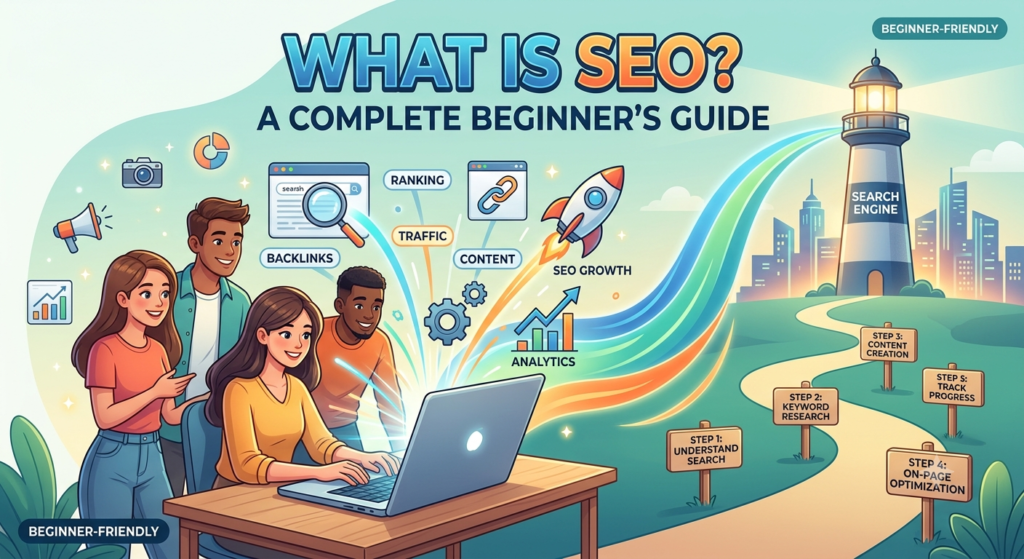
What Is SEO? A Complete Beginner’s Guide
Introduction: The Digital Compass
Imagine you’ve just opened a beautiful shop in a quiet alley. You have the best products, the most welcoming atmosphere, and prices that can’t be beaten. But there’s one problem—nobody knows you exist. Passersby stick to the main street, unaware of the hidden gem just around the corner.
This is the exact challenge facing millions of websites today. They publish valuable content, offer incredible services, and provide real solutions, yet remain invisible to the people who need them most. The solution to this modern dilemma is Search Engine Optimization—the art and science of making your digital presence discoverable.
SEO is the compass that guides people through the vast wilderness of the internet to your virtual doorstep. It’s the difference between being a hidden treasure and a celebrated destination. For businesses, creators, and organizations of all sizes, understanding SEO is no longer optional—it’s essential for survival in the digital ecosystem.
In this comprehensive guide, we’ll demystify SEO from the ground up. We’ll explore how search engines work, why SEO matters more than ever in 2026, and provide actionable strategies that you can implement today, regardless of your technical expertise. Whether you’re a small business owner, a budding blogger, or a marketing professional looking to expand your skill set, this guide will equip you with the knowledge you need to navigate the world of search engine optimization with confidence.
Chapter 1: What Exactly Is SEO?
The Simple Definition
Search Engine Optimization (SEO) is the practice of improving your website’s visibility in organic (non-paid) search results. When someone types a query into Google, Bing, or another search engine, SEO determines which websites appear on the first page—and which get buried where nobody ever looks.
At its core, SEO is about helping search engines understand your content and helping users find your site. It’s the bridge between what people are searching for and the content you create. Think of it as the language that connects your website to the billions of searches happening every day.
Beyond the Buzzword
Here’s what most people miss: SEO isn’t just about gaming algorithms or tricking search engines. At its heart, SEO is about understanding what your audience needs and making sure search engines can connect them to your content. The engines have become remarkably sophisticated at identifying quality. Gone are the days when you could stuff a page with keywords and expect to rank.
A helpful way to understand the modern approach to SEO is that it is a set of practices that improve a web page’s visibility in search engine results. The primary goal is to secure a high rank in organic search results—unpaid listings determined purely based on search algorithms. When you search for something on Google, the results that appear are not random. They’re the product of complex algorithms that evaluate billions of web pages to find the most relevant, useful, and trustworthy content.
The Evolution of SEO
SEO has come a long way since the early days of the internet. In the late 1990s and early 2000s, SEO was relatively simple. You could stuff your page with keywords, get as many backlinks as possible (regardless of quality), and watch your rankings soar. But search engines quickly realized that these tactics produced poor results for users. If someone searched for “best pizza in New York,” they wanted to find actual pizza places, not a page that repeated “best pizza” a thousand times.
Google’s algorithm updates—starting with Florida in 2003, then Panda in 2011, Penguin in 2012, Hummingbird in 2013, and more recent updates like BERT and MUM—have progressively made it harder to game the system. Today’s search engines are powered by artificial intelligence and machine learning. They understand context, user intent, and the relationship between concepts. They can identify content that’s genuinely helpful and content that’s designed purely to manipulate rankings.
Modern SEO is about creating value. The websites that rank highest are those that provide the best answers to searchers’ questions. They’re fast, mobile-friendly, secure, and easy to navigate. They earn links naturally because other websites want to reference their excellent content. They build trust with their audience over time.

SEO vs. SEM vs. PPC:
Clearing the Confusion
The terminology surrounding search marketing can be confusing. Here’s a simple breakdown:
SEM (Search Engine Marketing) is the umbrella term that encompasses all marketing activities related to search engines. This includes both organic optimization and paid advertising. Think of SEM as the entire toolkit, while SEO is one specific tool within it.
SEO (Search Engine Optimization) specifically refers to the organic, non-paid strategies. This is what we’ll focus on in this guide. It’s about earning visibility rather than paying for it.
PPC (Pay-Per-Click) is the paid component of search marketing. You bid on keywords, create ads, and pay each time someone clicks. Google Ads is the dominant platform. PPC can deliver immediate visibility, but it stops working the moment you stop paying.
The fundamental difference between SEO and PPC comes down to ownership versus rental. With PPC, you’re essentially renting space at the top of search results. The moment you stop paying, that visibility disappears. SEO builds assets you own—content, technical infrastructure, domain authority—that continue generating traffic indefinitely.
Here’s a quick comparison:
Factor SEO Paid Search (PPC)
Cost model Time and resources invested Pay per click
Timeline Months to see results Immediate visibility
Longevity Compounds over time Stops when budget ends
Trust signals Higher perceived credibility Clearly marked as ads
Click-through rate Generally higher Lower due to ad labeling
Sustainability Continues to grow Requires ongoing investment
Statistics show that organic search offers remarkable value. According to Search Engine Journal, SEO leads have a 14.6% close rate compared to just 1.7% for outbound leads. That’s because organic search connects you with people actively seeking solutions—not interrupting them with unsolicited messages. This is why businesses that invest in SEO consistently outperform those that rely solely on paid advertising over the long term.
Chapter 2: Why SEO Matters in 2026
The Reality of Search Behavior
Think about your own online behavior. When was the last time you searched for something and went beyond the first page of results? Chances are, you didn’t. The majority of users rely heavily on search engines to find information, products, and services.
Research consistently shows that the top three organic search results capture the vast majority of clicks. The first result typically gets about 28.5% of clicks, the second about 15.7%, and the third about 11%. By the time you reach the tenth position, click-through rates drop to around 2.5%. If your website doesn’t appear on those coveted top positions, you’re missing out on valuable opportunities to connect with your target audience.
The Numbers Don’t Lie
Social SEO’s potential to reach new customers is significant too. Nearly half of consumers use TikTok as a search engine, and more people (Gen Zers, in particular) use social platforms like YouTube and Instagram to find content that answers their questions. This doesn’t mean you should abandon traditional SEO; it means you should expand your understanding of search to include these emerging platforms.
The Business Case for SEO
Why should businesses invest in SEO? The answer is simple: ROI. SEO consistently delivers one of the highest returns on investment of any marketing channel. Here’s why:
Cost-Effectiveness: Unlike paid advertising, which requires constant investment, SEO continues to deliver results long after you’ve created the content. A well-optimized blog post can attract visitors for years.
Targeted Traffic: SEO connects you with people who are actively searching for what you offer. This is high-intent traffic—people who are ready to buy, sign up, or take action.
Brand Credibility: Websites that rank high in organic search are perceived as more trustworthy. Users trust Google’s judgment, and ranking well signals that your site is authoritative.
Competitive Advantage: If your competitors are investing in SEO and you’re not, they’re going to capture market share. In many industries, SEO is now table stakes—it’s not an advantage to have it, but it’s a disadvantage not to.
Long-Term Sustainability: SEO compounds over time. Every piece of content you create, every backlink you earn, every technical improvement you make builds on what came before. This creates a moat that protects your business from competition.
AI Is Changing the Game
The emergence of AI-powered search results has created new opportunities and challenges. According to seoClarity’s analysis of 432,000 keywords, 97 percent of AI Overviews cite at least one source from the top 20 organic results. This proves that ranking well is a reliable path to AI visibility.

This has led to a new concept called Generative Engine Optimization (GEO) . By integrating established SEO practices with answer-ready formatting and presenting information in a concise, easily skimmable structure, you make it easier for AI systems to extract and cite your content.
The businesses writing off SEO as dead are the ones that will fall behind. AI taking up more SERP real estate doesn’t change the fundamentals—well-structured, credible content is what earns citations in AI Overviews. In fact, the rise of AI might make SEO more important than ever. If AI systems are summarizing search results, you want to be one of the sources they cite.
Long-Term Sustainability
This compounding effect is one of SEO’s most powerful attributes. A blog post written today, optimized properly, can generate traffic for years. Compare this to a Facebook ad, which stops generating results the moment you stop funding it. SEO is not a sprint; it’s a marathon. But it’s a marathon that rewards you for every step you take.
Chapter 3: How Search Engines Word
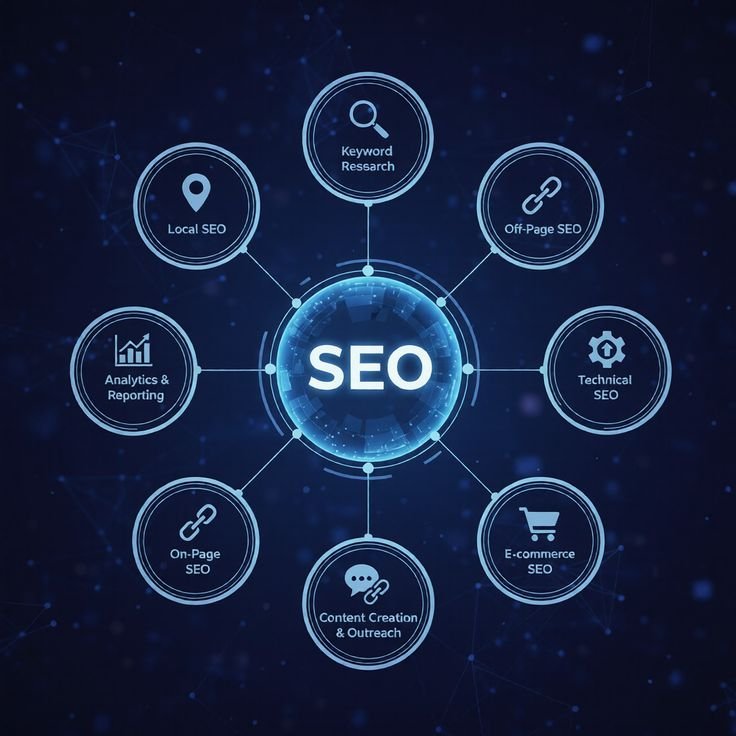
To master SEO, you need to understand the search engine process. Think of it as a three-step journey: crawling, indexing, and ranking.
Step 1: Crawling
Search engines use programs called crawlers or spiders to explore the web constantly, following links and reading content to figure out what exists out there.
These bots don’t see your site like a person does. They see code, structure, and links. If your site has broken links, noindex tags, or a confusing layout, crawlers might miss critical pages entirely. That’s why having clean navigation and a sitemap is essential if you want to get found.
If search engines cannot properly crawl a website, no amount of content or backlinks will help rankings. Crawling is the foundational step—if the bots can’t find your content, they can’t index it, and they certainly can’t rank it.
The Crawling Process in Detail
When a crawler visits your site, it starts with a list of URLs it already knows about. These come from sitemaps you’ve submitted and from links on other websites. The crawler then loads each page, reads its content, and extracts all the links on that page. It adds these new URLs to its list for future visits.
This is why links are so important for SEO. Each link is a signal to search engines that your content exists and is worth visiting. Internal links on your own site help crawlers discover all of your content, while external links (backlinks) help search engines discover your site in the first place.
Search engines allocate limited crawling resources to each site. If your site has technical problems—slow loading times, server errors, complicated navigation—crawlers might not spend enough time to discover all your content. This is why technical optimization is crucial. You want to make it as easy as possible for crawlers to do their job.
Step 2: Indexing
If crawlers find unique content, they add it to the huge database of discovered URLs, also known as the search index.
Not everything gets indexed. Content that is thin, duplicate, or blocked by robots.txt may be skipped. You can have a beautiful page full of insights, but if Google skips it during indexing, it might as well not exist.
The indexing process involves analyzing a page’s content to understand what it’s about. Search engines look at the text, images, meta tags, and structure of each page. They identify the main topics, the keywords used, and the overall theme. This information is stored in the search index, ready to be retrieved when someone performs a relevant search.
What Affects Indexing?
Several factors determine whether a page gets indexed:
Unique Content: If your content is duplicate (the same as other pages on your site or elsewhere), it may not be indexed.
Content Quality: Thin content—pages with very little text or substance—may be skipped.
Technical Issues: Broken pages, redirects, or server errors can prevent indexing.
Robots Instructions: If you’ve used a noindex tag or robots.txt to block crawlers, the page won’t be indexed.
Sitemap: Submitting a sitemap helps search engines find all your important pages.
Step 3: Ranking
Once the URLs are in the database, the ranking process begins. For each search query, Google has to try to organize the results from most relevant to least relevant. Search engines use hundreds of signals—from page speed and backlinks to search intent and topical relevance—to decide where your content lands.
What the Algorithm Looks For
Google’s algorithm isn’t one big rulebook. It’s a constantly evolving system made up of smaller algorithms working together to deliver the most helpful, relevant results.
What the algorithm actually looks for can be broken down into a few core ideas:
Relevance: Matching the user’s search intent. Does your content address what the user is actually looking for?
Quality: E-E-A-T—Experience, Expertise, Authoritativeness, and Trustworthiness. Does your content demonstrate genuine expertise and reliability?
Usability: Page speed, mobile-friendliness, and clean site architecture. Can users actually access and use your content easily?
Trust: Backlinks, content accuracy, and consistency. Does the broader web community vouch for your content?
You can’t cheat your way to the top anymore—you have to earn it by being genuinely useful, reliable, and technically sound. Search engines have become remarkably sophisticated at detecting manipulative tactics. Trying to game the system is more likely to result in penalties than rewards.
Chapter 4: The Three Pillars of SEO
Modern SEO comprises three distinct but interconnected disciplines. Each requires specialized knowledge and different approaches. Think of it like a three-legged stool—if one leg is weak, the whole thing wobbles.
Pillar 1: On-Page SEO
On-page optimization focuses on elements directly within your website. This is what most people think of when they hear “SEO”—keywords, meta tags, and content structure.
Key elements include:
Keyword Research and Analysis: Researching and selecting relevant keywords that align with your target audience’s search queries. This is the foundation of all SEO work. If you’re targeting the wrong keywords, nothing else matters.
Meta Tags: Crafting compelling titles and descriptions that accurately represent your content and incorporate target keywords. The page title has a big influence on which keywords the page is found for. The meta description doesn’t directly influence findability, but it can convince the user to click. A well-written meta description can significantly improve your click-through rate.
URL Structure: Creating clean and descriptive URLs that are easily understandable by both users and search engines. Try to include words in the URL that may be useful for users; for example, https://www.example.com/pets/cats.html rather than https://www.example.com/2/6772756D707920636174. Avoid using numbers or symbols that don’t mean anything to humans.
Content Optimization: Developing high-quality, keyword-rich content that is engaging, readable, and provides value to your audience. This means using your target keywords naturally, structuring your content with headings, and making sure it fully addresses the user’s needs.
Internal Linking: Creating a logical and user-friendly website structure, with well-structured internal links that improve navigation. Internal links help search engines understand the relationship between your pages and help users find related content.
Image Optimization: Using descriptive filenames and adding relevant alt text to improve accessibility and search engine understanding. Alt text also helps search engines understand what your images are about.
Heading Structure: Using H1, H2, H3 tags to structure your content logically. This makes it easier for both users and search engines to understand your content’s hierarchy.
Pillar 2: Off-Page SEO
Off-page optimization focuses on factors outside of your website that impact your search engine rankings.
Key elements include:
Link Building and Earning Backlinks: Acquiring high-quality backlinks from reputable websites to demonstrate authority and credibility to search engines. A single link from an authoritative industry publication can outweigh hundreds of links from low-quality directories. Backlinks are like votes of confidence—they tell search engines that others trust your content.
Social Media Signals: Building a strong social media presence and encouraging social signals to enhance your online visibility. While social signals aren’t a direct ranking factor, they can drive traffic, increase brand awareness, and lead to natural backlinks.
Online Directories and Citations: Listing your business in relevant online directories to improve local search visibility. For local businesses, consistency in name, address, and phone number across directories is crucial.
Guest Blogging and Influencer Outreach: Collaborating with industry influencers and guest blogging on authoritative websites to expand your reach. This helps build authority, gain exposure, and earn valuable backlinks.
Brand Mentions: Even unlinked mentions of your brand can be valuable, as they indicate that people are talking about your business.
Pillar 3: Technical SEO
Technical SEO ensures search engines can efficiently crawl, understand, and index your website. This is the foundation everything else builds upon—without solid technical infrastructure, even brilliant content won’t rank.
Key areas include:
Site Speed and Performance: Optimizing your site’s loading speed to ensure a fast user experience. Page load time directly impacts both rankings and user experience. A one-second delay in page load time can reduce conversions by 7%.
Mobile-Friendliness: Ensuring your website is fully optimized for mobile devices. Since most users visit mobile websites these days, search engines mainly evaluate the mobile version of your website. Google uses mobile-first indexing, which means it predominantly uses the mobile version of the content for indexing and ranking.
Site Structure and XML Sitemaps: Organizing your website’s structure in a logical manner and creating XML sitemaps to help search engines understand and crawl your site more efficiently. A sitemap should include only canonical pages, not contain 404 pages or redirected URLs. It acts as a roadmap for search engines, telling them about all the important pages on your site.
Robots.txt and Canonicalization: Implementing a robots.txt file to guide search engine crawlers and utilizing canonical tags to prevent duplicate content issues. Robots.txt tells crawlers which pages they can access, while canonical tags tell them which version of a page is the master copy.
HTTPS and Website Security: Securing your website with HTTPS encryption to protect user data and improve trustworthiness. Google has confirmed that HTTPS is a ranking signal. If your URL does not start with HTTPS, search engines will rank your website as less secure.
Schema Markup: Adding structured data to your website helps search engines better understand your content and can enhance your search results with rich snippets (like star ratings, prices, and event dates).
Chapter 5: Your First SEO Steps
Step 1: Know What Your Customers Are Looking For
Find out which keywords your customers are using in search engines to find your product or service.
How to get started:
Put yourself in your customer’s shoes: Think about the questions they may ask the search engine about your product or service. What problems are they trying to solve? What language do they use?
Write down relevant words: List all the words that you think may be relevant to your website or business. Don’t filter yourself at this stage—just get everything down.
Use keyword research tools: Tools like Google Keyword Planner, Ubersuggest, or SEMrush can reveal search volume, competition levels, and related keywords. Google Keyword Planner is free and provides data directly from Google.
Explore related search terms: Start by entering a search term relevant to your niche in Google and look at the autocomplete suggestions. Also, scroll to the bottom of the search results page to see “People also ask” and “Related searches” sections.
Analyze your competition: Look at what keywords your competitors are targeting. What topics are they covering? What seems to be working for them?
Think about search intent: Why is someone searching for this keyword? Are they looking for information, trying to make a purchase, or looking for a specific website? Aligning your content with search intent is crucial for ranking and conversion.
A quick tip: As a rule of thumb, you’ll want to avoid highly competitive keywords initially. Otherwise, you’d be up against well-established websites. Choose keywords that balance search volume and ranking difficulty. Look for “long-tail keywords”—phrases with three or more words that have lower competition but higher conversion rates because they capture more specific intent.
Step 2: Create a Logical Site Structure
Search engines need a clear, logical path through your content—and if your site structure is messy or confusing, your pages might never get discovered.
Good practices include:
Give each keyword group its own page
Use a logical structure with broad categories in the main menu and sub-pages beneath
Link to important pages in your navigation and footer menus
Use HTML internal links instead of JavaScript links to avoid crawling and rendering issues
Ensure all pages can be reached via at least one page on your website
Create a hierarchy that is intuitive for users—what would make sense if you were navigating the site for the first time?
Use breadcrumbs to help users understand where they are in your site structure
Step 3: Create Effective, Optimized Content
Good content is fundamental to SEO. Creating content that people find compelling and useful will likely influence your website’s presence in search results more than any other suggestion.
What good content looks like:
Well-organized: Write content naturally and break it up into paragraphs and sections with headings to help users navigate. A wall of text is overwhelming; break it down.
Unique: Don’t copy others’ content; create your own based on what you know. Original research, unique insights, and fresh perspectives are rewarded.
Up-to-date: Check in on previously published content and update it as needed. Stale content can harm your authority over time. Content freshness is a ranking factor.
Helpful and reliable: Write content that your readers will find genuinely useful. If someone reads your content and walks away feeling like they’ve learned something, you’ve done your job.
Comprehensive: Cover topics in depth. The best content on a topic is typically the most comprehensive, answering all the questions a user might have.
Engaging: Use examples, anecdotes, and case studies to make your content more interesting and memorable.
Avoid distracting advertisements that make it difficult for users to use your website. User experience is increasingly important for SEO.
Step 4: Write Good Link Text
Link text (also known as anchor text) tells users and Google something about the page you’re linking to. With appropriate anchor text, users and search engines can easily understand what your linked pages contain before they visit.
Good practices for link text:
Use descriptive text that accurately describes the linked page
Avoid generic text like “click here” or “learn more”
Keep it concise but informative
Use variations in your link text to avoid appearing manipulative
Ensure the linked page actually delivers what the link text promises
Step 5: Submit Your Site to Google Search Console
Setting up Google Search Console is one of the easiest wins in your SEO journey. Once your site is live, you can submit it to Google Search Console to tell the search engine, “Hey, I’m here, and I’ve got something worth indexing.”
It doesn’t guarantee instant rankings, but it puts your content on Google’s radar much faster. It also gives you insight into how Google sees your site, what’s indexed, and where potential issues exist.
To check if Google has already found your content, try searching on Google for your site with the site: search operator. For example, a search for site:wikipedia.org returns all indexed pages from Wikipedia. If your site doesn’t appear, or appears with fewer pages than expected, you need to submit it.
Step 6: Monitor Your Results
SEO success doesn’t happen overnight. Use Google Analytics and Google Search Console to track:
Which pages are getting organic traffic
Which keywords are driving visitors
How users are engaging with your content
Technical issues that need attention
Which content is performing best—and which needs improvement
Trends over time—are your results improving?
Regularly revisit your strategy as algorithms and competitors evolve. SEO is never “done”—it’s an ongoing process of refinement and improvement.
Chapter 6: Common Pitfalls to Avoid
Pitfall 1: Keyword Stuffing
Stuffing keywords into your copy can make it unreadable and much less effective, causing your pages to drop in the rankings. Use all keywords naturally throughout the text, ideally so that an average reader won’t even notice them.
How to avoid: Write for humans first, search engines second. If your content reads awkwardly because you’ve forced keywords in, rewrite it to be more natural. Modern search engines are sophisticated enough to understand synonyms and related concepts.
Pitfall 2: Low-Quality AI-Generated Content
While AI tools can help with content creation, AI-generated content is based on other content and is therefore never truly unique. If you’re planning to use AI, make sure it really adds value and don’t just do it for SEO purposes.
How to avoid: Use AI as a starting point or assistant, not as a replacement for human insight. Add your own expertise, unique perspectives, and original research. Google’s algorithms can detect low-quality AI content and will penalize sites that publish it.
Pitfall 3: Slow Website Speed
A slow website means potential customers may leave before your website fully loads. Page speed is a confirmed Google ranking factor.
How to avoid: Check your website speed using tools like Google Pagespeed Tool or GT Metrix. Optimize images, reduce server response time, use a content delivery network (CDN), and minimize the use of heavy scripts.
Pitfall 4: Paid Links
Do not pay others to post a link to your site. This goes against Google’s guidelines. They can impose a penalty, like lowering your ranking or removing you from the search results.
How to avoid: Earn links naturally by creating content worth linking to. Focus on building relationships and providing value. Legitimate backlinks come from being recognized as an authority, not from buying your way in.
Pitfall 5: An Unsafe Website
If your URL does not start with HTTPS, search engines will rank your website as less secure. Make your website more secure with an SSL certificate.
How to avoid: Purchase and install an SSL certificate from your hosting provider. Most modern hosts offer free SSL certificates through Let’s Encrypt. Once installed, ensure all your URLs redirect to the HTTPS version.
Pitfall 6: Ignoring Mobile Users
Make sure your website works well on a mobile phone. Since most users visit mobile websites, search engines mainly evaluate the mobile version of your website.
How to avoid: Use responsive design so your site automatically adapts to any screen size. Test your site on multiple devices. Ensure text is readable without zooming, buttons are easily clickable on touch screens, and images load quickly on mobile connections.
Pitfall 7: Neglecting User Experience
Search engines want to deliver results that make users happy. If users have a bad experience on your site—confusing navigation, intrusive pop-ups, or hard-to-read content—your rankings will suffer.
How to avoid: Make your website easy to use. Put yourself in your visitors’ shoes. What would frustrate you? Fix those issues.
Chapter 7: Measuring SEO Success
Key Metrics to Track
Organic Traffic: Number of visitors coming from search engines. This is the most fundamental metric. Are more people finding you through search?
Keyword Rankings: Where your pages appear for target keywords. Are you moving up for the terms that matter?
Click-Through Rate (CTR): Percentage of searchers who click on your result. A low CTR suggests your title and description aren’t compelling enough.
Bounce Rate: Percentage of visitors who leave after viewing one page. A high bounce rate suggests your content isn’t meeting user expectations.
Conversion Rate: Percentage of visitors who complete a desired action (purchase, sign-up, download, etc.). Ultimately, this is what matters most.
Backlinks: Number and quality of external sites linking to you. Are you earning more authority over time?
Page Speed: How fast your pages load. This affects both user experience and rankings.
Indexed Pages: How many of your pages are in the search index. If this drops, you have a problem.
Organic Visibility: Your share of voice in search results for your target keywords.
Tools for the Job
Google Search Console: Monitor indexing, search queries, and technical issues. This is your primary tool for understanding how Google sees your site.
Google Analytics: Track traffic sources and user behavior. Understand where your visitors come from and what they do on your site.
Ubersuggest or SEMrush: Keyword research and competitor analysis. See what your competitors are doing and find opportunities.
Yoast SEO: WordPress plugin for on-page optimization. Makes it easy to optimize content as you write.
Ahrefs or Moz: Comprehensive SEO tools for backlink analysis, keyword tracking, and site audits.
Frequently Asked Questions
- What is SEO in simple terms?
SEO, or Search Engine Optimization, is the practice of improving your website to help it appear more prominently in search engine results when people search for topics related to your business or content. It’s about making your site easy for both users and search engines to understand. - How long does it take to see SEO results?
Every change you make will take some time to be reflected. Some changes might take effect in a few hours, others could take several months. In general, you should wait a few weeks to assess whether your work had beneficial effects. Most SEO strategies take 6-12 months to show significant results, but consistent effort pays off over time. - Is SEO better than paid advertising?
Both have their place. PPC delivers immediate visibility but stops when your budget ends. SEO takes time to build but compounds over time, delivering sustainable, long-term traffic. Statistics show SEO leads have a significantly higher close rate (14.6%) compared to outbound leads (1.7%). For most businesses, a combination of both is the best approach. - What is the difference between a meta title and a meta description?
You don’t see the page title on the page, but it is in the browser’s tab. The page title is also usually the clickable link in your search engine results. The meta title has a big influence on which keywords the page is found for. The meta description is a short description that appears below the clickable link in search results. It doesn’t directly influence rankings but can convince users to click. - What does E-E-A-T stand for?
E-E-A-T stands for Experience, Expertise, Authoritativeness, and Trustworthiness. It’s a framework that Google uses to evaluate content quality. To demonstrate E-E-A-T, create well-researched content supported by expert sources, cite your sources, and build author bio pages that showcase credentials. - Why is mobile-friendliness important for SEO?
Since most users visit mobile websites, search engines mainly evaluate the mobile version of your website for ranking decisions. A mobile-friendly website is essential for both user experience and search performance. Google uses mobile-first indexing, meaning it primarily uses the mobile version of a site to determine rankings. - What is keyword stuffing and why should I avoid it?
Keyword stuffing is the practice of overfilling your content with keywords in an attempt to manipulate search rankings. Google sees this as a spammy tactic, which is bound to backfire. Use all keywords naturally throughout the text so that an average reader won’t even notice them. - What are backlinks and why do they matter?
Backlinks are links from other websites to your site. They act as votes of confidence, signaling to search engines that your content is trustworthy and authoritative. Quality matters more than quantity—a single link from an authoritative industry publication can outweigh hundreds of links from low-quality directories. - How has AI changed SEO?
AI systems increasingly cite content in search results. According to analysis, 97% of AI Overviews cite at least one source from the top 20 organic results. Well-structured, credible content is what earns citations in AI Overviews. This has given rise to Generative Engine Optimization (GEO) alongside traditional SEO. - What are the three pillars of SEO?
The three pillars are on-page SEO (optimizing content and HTML elements), off-page SEO (building authority through external signals like backlinks), and technical SEO (optimizing site infrastructure so search engines can crawl and index correctly). All three are necessary for success. - Can I do SEO myself, or do I need an agency?
Many businesses successfully handle SEO in-house. However, it requires significant time and learning investment. If you have the resources and patience to learn, DIY SEO is possible for many basic strategies. For more competitive industries or advanced tactics, specialist agencies may offer better results. - Is SEO a one-time thing?
No! SEO requires ongoing effort. Search algorithms change, competitors evolve, and user behavior shifts. Regular content creation, technical maintenance, and strategy adjustments are necessary to maintain and improve your rankings.

Conclusion: The Path Forward
SEO is not a one-time project or a quick fix. It’s an ongoing journey of understanding your audience, creating valuable content, and building a trustworthy digital presence. The fundamentals haven’t changed: helpful and relevant content that matches searcher intent, a technically sound site, and high-quality backlinks from legitimate websites all still lay a solid foundation for long-term SEO success. To strengthen your strategy, focus on keyword research, implement proven on-page SEO techniques, follow a comprehensive technical SEO checklist, and develop a consistent content marketing strategy. For the latest search quality guidance, refer to Google’s Helpful Content guidelines and the official Google Search Central documentation.
If you’re just getting started, you don’t need to know everything—you just need to understand the basics well enough to build a solid foundation. The path to the top of search results begins with a single article being published, a single page being optimized, a single user finding the answer they were looking for.
As we look toward the future, the integration of AI into search creates new opportunities for well-optimized content. Businesses that invest in SEO services, implement effective on-page SEO strategies, and follow a comprehensive technical SEO checklist will be better positioned to succeed. The businesses writing off SEO as dead are the ones that will fall behind. By implementing the fundamentals covered in this guide, supported by thorough keyword research and a strong content marketing strategy, you’re not just competing for a blue link—you’re competing for the answer itself.
Your Action Plan
Start with keyword research—identify what your audience is searching for
Create a logical site structure—make it easy for search engines and users to navigate
Publish high-quality content—focus on being genuinely helpful
Optimize your technical foundation—speed, mobile, security
Build authority—earn links through great content and relationships
Monitor and iterate—measure your results and refine your approach
The time to start is now. Your future customers are searching for you.
References and Further Reading
Google Search Central – SEO Starter Guide – Official documentation from Google
Neil Patel’s SEO Basics Guide – Practical SEO guidance for 2026
Google Search Console – Essential tool for monitoring your site’s performance
Google Analytics – Track and analyze your website traffic
Surfer SEO’s Beginner Guide – Comprehensive SEO fundamentals
Moz Beginner’s Guide to SEO – One of the most comprehensive free guides available
Backlinko’s SEO Guide – Updated regularly with current best practices
Search Engine Journal – Stay updated on SEO news and trends