Introduction
Table of Contents
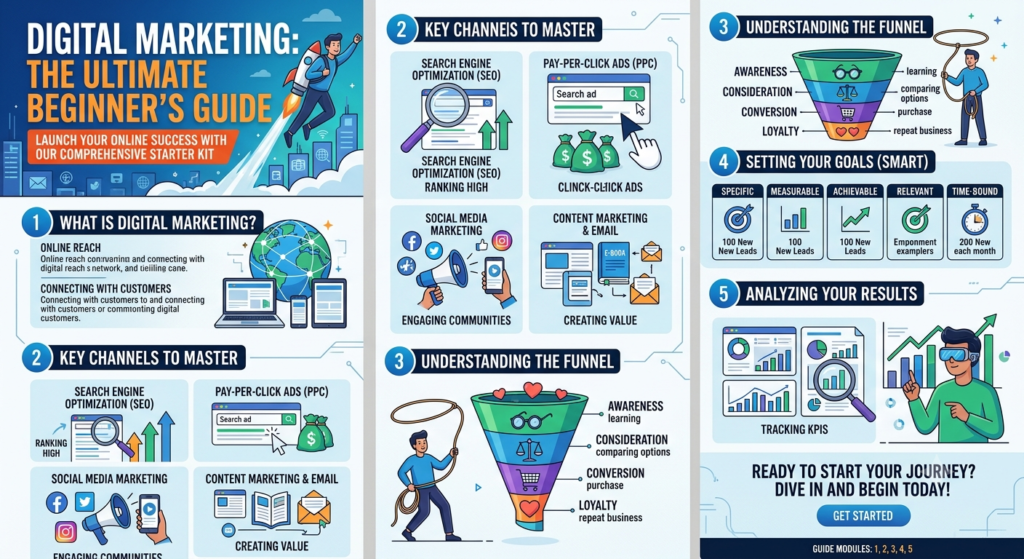
In today’s digital-first world, having an online presence is no longer optional—it’s essential. Whether you’re a small business owner, entrepreneur, freelancer, blogger, or someone looking to build a personal brand, Digital Marketing is one of the most effective ways to reach your audience, generate leads, and grow your business.
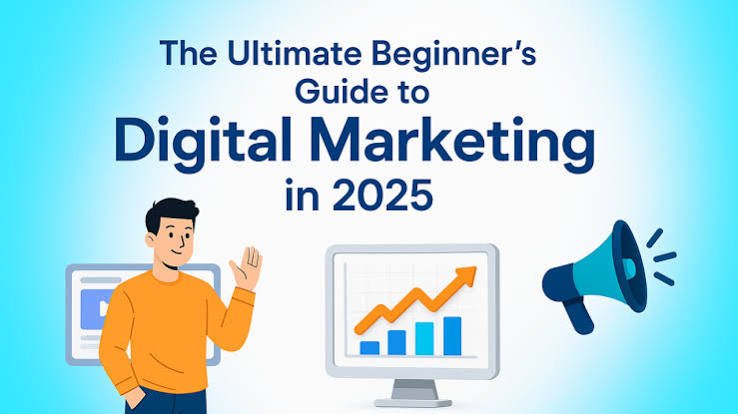
Unlike traditional advertising methods such as newspapers, television, and radio, digital marketing allows businesses to connect with potential customers through search engines, social media platforms, email campaigns, websites, and online advertisements. With billions of people using the internet every day, businesses of all sizes now have the opportunity to compete, regardless of their location or budget.
According to Google Search Central, creating valuable, user-focused content and maintaining a technically sound website are key factors in building long-term online visibility. Learn more from the official resource: https://developers.google.com/search.
If you’re new to online marketing, this beginner-friendly guide will explain everything you need to know about Digital Marketing, including its benefits, core channels, and practical strategies to help you succeed online.
For more digital marketing insights, SEO tips, and business growth strategies, visit our blog at https://rankifycontent.com/.
What Is Digital Marketing?
Digital Marketing refers to promoting products, services, or brands using digital channels such as search engines, websites, social media, email, mobile applications, and online advertising. Its main objective is to reach the right audience at the right time and encourage them to take meaningful actions, such as making a purchase, subscribing to a newsletter, or contacting a business.

Unlike traditional marketing, digital marketing provides measurable results. Businesses can monitor website traffic, ad performance, user behavior, and conversion rates in real time, allowing them to refine their strategies and improve outcomes.
Some of the most common digital marketing channels include:
Search Engine Optimization (SEO)
Content Marketing
Social Media Marketing
Email Marketing
Pay-Per-Click (PPC) Advertising
Affiliate Marketing
Influencer Marketing
Video Marketing
Mobile Marketing
Each channel plays a unique role in helping businesses attract, engage, and convert customers online.
Why Digital Marketing Is Important
The internet has changed how people search for information, compare products, and make purchasing decisions. Before buying a product or choosing a service, many consumers research online, read reviews, and compare different options.
This shift in consumer behavior makes Digital Marketing an essential investment for businesses aiming to remain competitive.
Reach a Global Audience
A business with a well-optimized website can attract visitors from different cities, countries, or even continents. Unlike traditional advertising, digital marketing removes many geographical barriers and opens opportunities to serve customers worldwide.
Cost-Effective Marketing
Digital marketing often delivers a higher return on investment than many traditional advertising methods. Small businesses can start with modest budgets and scale their campaigns as they grow.
For example, publishing helpful blog posts, optimizing pages for search engines, or engaging with customers on social media can generate long-term traffic without the ongoing costs associated with traditional advertising.
Measurable Results
One of the greatest advantages of digital marketing is access to detailed analytics.
Businesses can measure:
Website visitors
Traffic sources
Conversion rates
Bounce rates
Time spent on pages
Keyword rankings
Email open rates
Social media engagement
Platforms like Google Analytics provide valuable insights into user behavior and website performance. Learn more at https://analytics.google.com/.
Better Customer Engagement
Digital marketing enables two-way communication between businesses and customers.
Companies can:
Respond to comments
Answer questions
Conduct surveys
Share updates
Build online communities
This interaction helps strengthen customer relationships and improve brand loyalty.
Benefits of Digital Marketing
Businesses of every size can benefit from implementing an effective digital marketing strategy.
Increased Brand Awareness
A consistent online presence across search engines, blogs, and social media platforms helps more people discover your business. Over time, this visibility builds familiarity and trust.
Higher Website Traffic
By creating valuable content and optimizing it for search engines, businesses can attract visitors who are actively searching for related products or services.
Organic traffic from SEO often provides sustainable, long-term growth.
Better Lead Generation
Digital marketing allows businesses to attract people who are already interested in their offerings.
Examples include:
Downloading a free guide
Signing up for a newsletter
Requesting a quote
Booking a consultation
Purchasing a product
These actions can be tracked and optimized to improve marketing performance.
Improved Customer Trust
Consumers tend to trust businesses that provide helpful information, maintain professional websites, and communicate consistently across digital platforms.
Publishing informative blog articles, answering common questions, and sharing customer success stories can strengthen credibility.
Higher Conversion Rates
A well-designed website combined with quality content, clear calls to action, and user-friendly navigation encourages visitors to become customers.
Small improvements—such as faster loading speeds or simplified contact forms—can significantly increase conversions.
How Digital Marketing Works
Digital marketing follows a structured process that guides potential customers through different stages of the buying journey.
Step 1: Attract Visitors
Businesses first attract users through various channels, including:
Search engine optimization (SEO)
Social media content
Online advertisements
Blog articles
Videos
Email campaigns
The goal is to introduce potential customers to the brand.
Step 2: Engage Your Audience
After attracting visitors, businesses provide valuable information to build trust.
This can include:
Educational blog posts
Helpful videos
Product comparisons
Tutorials
Customer testimonials
The more useful the content, the more likely visitors are to stay and explore.
Step 3: Convert Visitors into Customers
Once visitors are engaged, businesses encourage them to take specific actions.
Common calls to action include:
Buy Now
Contact Us
Book a Demo
Download Free Guide
Subscribe Today
Clear and compelling calls to action improve conversion rates.
Step 4: Retain Customers
Successful digital marketing doesn’t stop after a sale.
Businesses continue building relationships through:
Email newsletters
Loyalty programs
Exclusive offers
Educational content
Customer support
Retaining existing customers is often more cost-effective than acquiring new ones.
Key Components of a Successful Digital Marketing Strategy
Although every business is unique, successful strategies usually include these core elements:
A Professional Website
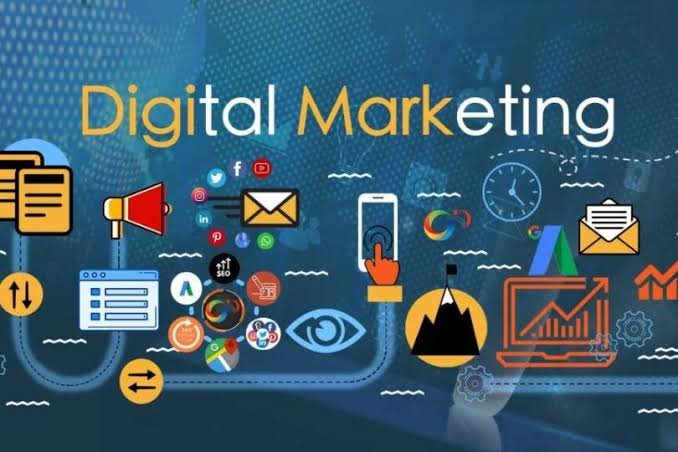
Your website serves as the foundation of your online presence. It should be fast, mobile-friendly, secure, and easy to navigate.
Valuable Content
Publishing informative, original content helps answer users’ questions and improves visibility in search engines.
Search Engine Optimization (SEO)
SEO improves your website’s chances of appearing in search results when users search for relevant topics.
Social Media Presence
Platforms such as Facebook, Instagram, LinkedIn, and YouTube help businesses connect with audiences and share content.
Email Marketing
Email remains one of the most effective channels for nurturing leads and maintaining customer relationships.
Performance Tracking
Monitoring key metrics allows businesses to identify what works and continuously improve their marketing efforts.
Common Myths About Digital Marketing
Many beginners have misconceptions about digital marketing.
Myth 1: Digital Marketing Is Only for Large Companies
Reality: Businesses of all sizes can benefit from digital marketing. Many small businesses achieve impressive growth through SEO, content marketing, and social media.
Myth 2: Results Happen Overnight
Reality: Sustainable digital marketing requires consistency. SEO and content marketing often take time to build authority and generate long-term traffic.
Myth 3: Social Media Alone Is Enough
Reality: While social media is valuable, combining it with SEO, content marketing, email marketing, and a well-optimized website usually produces stronger results.
Conclusion of Part 1A
Digital marketing has transformed the way businesses connect with customers. By leveraging search engines, websites, social media, email, and online advertising, organizations can increase visibility, build trust, and achieve sustainable growth.
Understanding the fundamentals is the first step toward creating an effective online presence. Whether you’re launching a new business or expanding an existing one, investing in digital marketing skills can deliver long-term benefits.
In Part 1B, we’ll explore the major types of digital marketing—including SEO, Content Marketing, Social Media Marketing, Email Marketing, PPC Advertising, and Affiliate Marketing—and explain how each channel contributes to online success.Digital Marketing: The Ultimate Beginner’s Guide to Growing Online (2026)
Part 1B: Types of Digital Marketing, SEO, Content Marketing, Social Media & More
Focus Keyword: Digital Marketing
Secondary Keywords: SEO, Content Marketing, Social Media Marketing, Email Marketing, PPC, Affiliate Marketing
Types of Digital Marketing
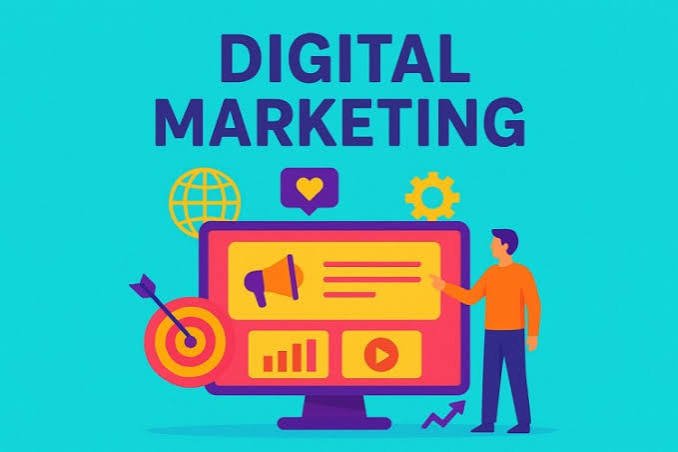
Digital marketing is not a single strategy—it is a collection of channels and techniques that help businesses attract, engage, and convert customers online. Each channel serves a different purpose, and the most successful businesses often combine several of them into one integrated marketing strategy.
If you’re just starting, understanding the major types of digital marketing will help you choose the right approach based on your goals, audience, and budget.
Search Engine Optimization (SEO)
Search Engine Optimization (SEO) is the process of improving a website so it ranks higher in search engine results. When users search for products, services, or information, SEO helps your website appear in front of the right audience.
Unlike paid advertising, SEO focuses on earning organic traffic by creating valuable content and optimizing your website.
Key Elements of SEO
Keyword Research
Finding the words and phrases your audience searches for is the foundation of SEO. Tools like Google Keyword Planner can help identify relevant keywords:
https://ads.google.com/home/tools/keyword-planner/
On-Page SEO
On-page optimization includes:
Writing unique title tags
Creating compelling meta descriptions
Using heading tags (H1, H2, H3)
Adding internal links
Optimizing images
Naturally placing keywords
Improving readability
Technical SEO
Technical SEO focuses on website performance, including:
Fast loading speed
Mobile responsiveness
Secure HTTPS connection
XML sitemap
Structured data
Clean URL structure
Google provides detailed documentation through Google Search Central:
https://developers.google.com/search
Off-Page SEO
Off-page SEO involves building your website’s authority through quality backlinks, digital PR, and brand mentions from reputable websites.
Content Marketing
Content marketing is the practice of creating useful, informative, and engaging content to attract and retain customers.
Instead of directly promoting products, content marketing focuses on solving problems and answering questions. High-quality content helps establish trust and positions your business as an authority in its niche.
Examples of content include:
Blog posts
Guides
Tutorials
Case studies
Infographics
Videos
Podcasts
E-books
For example, if you run a fast-food website, publishing articles about recipes, restaurant reviews, and food trends can attract readers who may later become customers.
For more SEO and content marketing resources, you can also explore our website:
https://rankifycontent.com/
Social Media Marketing
Social media marketing involves promoting your brand through platforms where your audience spends time online.

Popular platforms include:
Facebook
Instagram
LinkedIn
X (formerly Twitter)
Pinterest
TikTok
YouTube
Each platform serves different purposes. LinkedIn is ideal for B2B marketing, while Instagram and TikTok are excellent for visual brands and consumer products.
Benefits of social media marketing include:
Increased brand awareness
Better customer engagement
Website traffic
Lead generation
Community building
Posting consistently and interacting with followers helps strengthen relationships and improve visibility.
Email Marketing
Email marketing remains one of the highest-return digital marketing channels.
Instead of relying entirely on search engines or social media, businesses can communicate directly with subscribers through personalized emails.
Common email campaigns include:
Welcome emails
Promotional offers
Product launches
Weekly newsletters
Educational content
Customer surveys
Successful email marketing focuses on providing value rather than sending constant sales messages.
Popular email marketing platforms include:
Mailchimp
Brevo
ConvertKit
ActiveCampaign
Pay-Per-Click (PPC) Advertising
PPC is a form of online advertising where businesses pay only when someone clicks on their advertisement.
Google Ads is one of the most widely used PPC platforms, allowing businesses to display ads in search results for specific keywords.
Benefits include:
Immediate visibility
Targeted audiences
Budget control
Performance tracking
Fast lead generation
Unlike SEO, which takes time to build, PPC can generate traffic almost immediately.
Affiliate Marketing
Affiliate marketing is a performance-based strategy where individuals or publishers promote products or services in exchange for a commission on successful referrals.
Many companies use affiliate programs to expand their reach without paying upfront advertising costs.
Affiliate marketers often create:
Product reviews
Buying guides
Tutorials
Comparison articles
When readers make purchases through affiliate links, the publisher earns a commission.
Influencer Marketing
Influencer marketing involves partnering with content creators who have established audiences.
Influencers may promote products through:
Instagram posts
YouTube videos
TikTok content
Blog articles
Live streams
Choosing influencers whose audience aligns with your target market can improve campaign effectiveness.
Video Marketing
Video has become one of the most engaging forms of digital content.
Businesses use videos to:
Demonstrate products
Explain services
Share customer testimonials
Publish tutorials
Answer common questions
Platforms such as YouTube, Instagram Reels, and TikTok provide opportunities to reach large audiences through short and long-form video content.
Mobile Marketing
With smartphones becoming the primary device for internet browsing, mobile marketing has become increasingly important.
Examples include:
Mobile-friendly websites
SMS marketing
App notifications
Mobile advertisements
Location-based promotions
A responsive website ensures users have a positive experience regardless of screen size.
Choosing the Right Digital Marketing Channels
Not every business needs to invest equally in every marketing channel.
For example:
Local Businesses
Focus on:
Local SEO
Google Business Profile
Facebook
Customer reviews
E-commerce Stores
Prioritize:
SEO
Google Shopping Ads
Email marketing
Instagram marketing
Product videos
Bloggers
Concentrate on:
SEO
Content marketing
Pinterest
Email newsletters
B2B Companies
Invest in:
LinkedIn
Content marketing
Email campaigns
Webinars
Search engine optimization
Measuring Digital Marketing Success
Successful digital marketing depends on continuous improvement.
Key performance indicators (KPIs) include:
Organic website traffic
Keyword rankings
Conversion rate
Bounce rate
Average session duration
Click-through rate (CTR)
Cost per acquisition (CPA)
Return on investment (ROI)
Monitoring these metrics helps businesses identify successful strategies and areas for improvement.
Common Beginner Mistakes
Many beginners make avoidable mistakes when starting digital marketing.
Some of the most common include:
Ignoring SEO
Publishing inconsistent content
Targeting the wrong audience
Failing to analyze results
Overusing keywords
Neglecting mobile optimization
Buying low-quality backlinks
Posting without a content strategy
Avoiding these mistakes can improve long-term performance and help build a stronger online presence.
Why an Integrated Strategy Works Best
The most successful businesses combine multiple digital marketing channels instead of relying on just one.
For example:
SEO brings organic visitors.
Content marketing educates users.
Social media builds engagement.
Email marketing nurtures leads.
PPC generates immediate traffic.
Analytics measures performance.
When these channels work together, they create a more effective and sustainable marketing strategy.Digital Marketing: The Ultimate Beginner’s Guide to Growing Online (2026)
Part 2A: Creating a Digital Marketing Strategy, Website Optimization, Keyword Research & Content Creation
Focus Keyword: Digital Marketing
Secondary Keywords: Digital Marketing Strategy, Website Optimization, Keyword Research, Content Marketing, SEO for Beginners
Creating a Digital Marketing Strategy
A successful Digital Marketing campaign doesn’t happen by chance. It starts with a clear strategy that outlines your goals, target audience, marketing channels, and methods for measuring success. Whether you’re launching a new business or expanding an existing one, having a structured plan helps you make better decisions and achieve consistent results.
Think of your digital marketing strategy as a roadmap. It keeps your efforts focused and ensures every piece of content, advertisement, or campaign supports your overall business objectives.
Step 1: Define Your Goals
Before creating content or running advertisements, decide what you want to achieve.
Common digital marketing goals include:
Increase website traffic
Generate more leads
Improve brand awareness
Boost online sales
Grow an email subscriber list
Increase social media engagement
Improve customer retention
Setting SMART goals (Specific, Measurable, Achievable, Relevant, and Time-bound) makes it easier to track progress.
For example:
“Increase organic website traffic by 30% over the next six months through SEO and content marketing.”
Step 2: Understand Your Target Audience
Knowing your audience is essential for creating relevant content and marketing campaigns.
Ask yourself:
Who are your ideal customers?
What problems do they need to solve?
What platforms do they use?
What type of content do they prefer?
What motivates them to make a purchase?
Creating customer personas can help you visualize your audience and tailor your messaging accordingly.
Step 3: Build a Professional Website
Your website is the foundation of your digital marketing efforts. It should provide a positive user experience and make it easy for visitors to find information.
A high-performing website should include:
Mobile-friendly design
Fast loading speed
Clear navigation
Secure HTTPS connection
Easy-to-read content
Contact information
Strong calls to action (CTAs)
Google recommends creating websites that prioritize user experience and helpful content. Learn more through Google Search Central:
Website Optimization Best Practices
Optimizing your website improves both user experience and search engine visibility.
Improve Page Speed
Visitors expect websites to load quickly. Slow pages often lead to higher bounce rates and lower conversions.
Ways to improve speed:
Compress images
Minify CSS and JavaScript
Enable browser caching
Choose reliable web hosting
Use a Content Delivery Network (CDN)
Google’s PageSpeed Insights can analyze your website and provide recommendations:
Make Your Website Mobile-Friendly
Since a large percentage of users browse the internet on smartphones, your website should work seamlessly across all devices.
Ensure that:
Text is easy to read.
Buttons are easy to tap.
Images scale correctly.
Navigation remains simple.
Responsive design improves both usability and SEO.
Optimize Navigation
Visitors should be able to find information quickly.
Include:
Clear menus
Search functionality
Breadcrumb navigation
Internal links to related content
Simple navigation encourages users to explore more pages and spend more time on your website.
Keyword Research: The Foundation of SEO
Keyword research helps you understand what your audience is searching for online.
By targeting relevant keywords, you can create content that matches user intent and attracts qualified traffic.
Types of Keywords
Short-Tail Keywords
Examples:
Digital Marketing
SEO
Content Marketing
These keywords have high search volume but are often more competitive.
Long-Tail Keywords
Examples:
Digital marketing for beginners
How to improve website SEO
Best digital marketing strategy for small business
Long-tail keywords usually have lower competition and attract more targeted visitors.
Local Keywords
Examples:
Digital marketing agency in Lahore
SEO services near me
These are particularly valuable for local businesses.
Keyword Research Tools
Several tools can help identify valuable keywords.
Popular options include:
Google Keyword Planner
Google Trends
Ahrefs
SEMrush
Ubersuggest
These platforms provide insights into search volume, competition, and keyword ideas.
Search Intent
Understanding search intent helps create content that meets users’ expectations.
There are four primary types:
Informational
Users want information.
Example:
“What is digital marketing?”
Navigational
Users want to visit a specific website.
Example:
“Google Analytics login.”
Commercial
Users are comparing products or services before making a decision.
Example:
“Best SEO tools for beginners.”
Transactional
Users are ready to take action.
Example:
“Buy digital marketing course.”
Matching your content to search intent improves rankings and user satisfaction.
Creating High-Quality Content
Content is one of the most powerful digital marketing assets.
Instead of writing only for search engines, focus on creating valuable information that answers users’ questions.
High-quality content should be:
Original
Accurate
Well-structured
Easy to read
Helpful
Regularly updated
Search engines reward websites that consistently publish useful content.
Content Types That Drive Traffic
A successful content strategy often includes multiple formats.
Popular content types include:
Blog Posts
Educational articles help attract organic traffic while establishing expertise.
How-To Guides
Step-by-step tutorials solve specific problems and encourage visitors to return.
Case Studies
Real-world examples demonstrate experience and build trust.
Videos
Video content can improve engagement and explain complex topics more effectively than text alone.
Infographics
Visual content makes information easier to understand and share.
Writing SEO-Friendly Content
When writing articles, follow these best practices:
Use Clear Headings
Organize content using H1, H2, and H3 headings.
Naturally Include Keywords
Place keywords where they fit naturally instead of forcing them into every paragraph.
Write for Humans First
Helpful content performs better over time than content written solely for search engines.
Add Internal Links
Internal links help readers discover related content while improving website navigation.
For example:
“If you’re interested in improving your online presence, explore more SEO and content marketing resources on our website: https://rankifycontent.com/.”
Link to Trusted Sources
Referencing authoritative websites strengthens credibility.
Examples include:
Google Search Central
Google Analytics
HubSpot
Meta Business Help Center
Building a Strong Online Brand
A recognizable brand helps customers remember your business.
Key elements include:
Consistent logo
Professional website
Brand colors
Clear messaging
Helpful content
Active social media profiles
Consistency across all channels builds trust and strengthens brand recognition.
Generating Organic Website Traffic
Organic traffic refers to visitors who find your website through unpaid search results.
Strategies include:
Publishing valuable blog posts
Optimizing pages for SEO
Updating older content
Improving website speed
Building quality backlinks
Answering common customer questions
Although organic growth takes time, it often provides long-term, sustainable results.
Measuring Your Progress
Tracking performance helps determine whether your strategy is working.
Important metrics include:
Organic traffic
Keyword rankings
Conversion rate
Bounce rate
Time on page
Pages per session
Click-through rate (CTR)
Use tools like Google Analytics and Google Search Console to monitor website performance and identify opportunities for improvement. Essential Digital Marketing Tools
Every successful Digital Marketing strategy relies on the right tools. These platforms help businesses understand their audience, monitor website performance, optimize content, and improve marketing campaigns. While there are hundreds of tools available, beginners should start with a few trusted options that are easy to learn and widely used.Every successful Digital Marketing strategy relies on the right tools. These platforms help businesses understand their audience, monitor website performance, optimize content, and improve marketing campaigns. While there are hundreds of tools available, beginners should start with a few trusted options that are easy to learn and widely used. To explore more expert guides on SEO, content marketing, and digital growth strategies, visit : https://rankifycontent.com/.
Google Analytics
Google Analytics is one of the most important tools for tracking website performance. It provides detailed information about visitor behavior, traffic sources, user demographics, and conversions.
With Google Analytics, you can monitor:
Website visitors
Page views
Traffic channels
User engagement
Goal completions
Conversion rates
Understanding these metrics helps you make informed marketing decisions and improve your website over time.
Learn more by visiting Google Analytics:
Google Search Console
Google Search Console helps website owners monitor their site’s presence in Google Search results.
It allows you to:
Check keyword rankings
Monitor indexing
Identify crawl errors
Submit XML sitemaps
Improve search visibility
The platform is free and highly recommended for every website owner.
Official website:
Google Keyword Planner
Finding the right keywords is essential for SEO and content marketing.
Google Keyword Planner helps marketers discover:
Keyword ideas
Monthly search volume
Competition levels
Related search terms
It is especially useful when planning blog content and PPC campaigns.
Canva
Visual content plays a significant role in digital marketing.
Canva enables users to create:
Social media graphics
Blog banners
Infographics
Presentations
Marketing materials
Even beginners can design professional-looking graphics without advanced design skills.
Official website:
HubSpot
HubSpot provides marketing, sales, and customer relationship management (CRM) tools.
Businesses use HubSpot for:
Email marketing
Lead generation
Marketing automation
Customer management
Content planning
Learn more at:
Social Media Marketing Strategy
Social media has become one of the most effective ways to build brand awareness and connect directly with customers.
However, success requires more than simply posting content every day.
A successful strategy includes:
Consistent branding
Valuable content
Audience engagement
Performance analysis
Regular posting schedule
Choose the Right Platforms
Not every social media platform suits every business.
Ideal for:
Local businesses
Community engagement
Paid advertising
Events
Instagram
Perfect for:
Restaurants
Fashion brands
Travel businesses
Influencers
Product photography
LinkedIn
Best for:
B2B marketing
Professional networking
Corporate branding
Recruitment
YouTube
Excellent for:
Tutorials
Product demonstrations
Educational content
Long-form videos
TikTok
Popular among younger audiences and suitable for:
Short videos
Entertainment
Brand awareness
Viral campaigns
Create a Content Calendar
Planning your content in advance ensures consistency.
Your monthly calendar may include:
Educational articles
Product promotions
Customer testimonials
Industry news
Behind-the-scenes content
Video tutorials
Polls and quizzes
Scheduling posts saves time and improves organization.
Email Marketing Best Practices
Despite the popularity of social media, email marketing remains one of the highest-performing digital channels.
Successful email campaigns focus on delivering value rather than constant sales messages.
Examples include:
Weekly newsletters
Product updates
Educational content
Exclusive discounts
Event invitations
Build Your Email List Naturally
Avoid purchasing email lists.
Instead:
Offer free guides.
Create downloadable resources.
Provide discount coupons.
Use newsletter signup forms.
Encourage blog subscriptions.
Growing an engaged subscriber list leads to higher open and conversion rates.
Personalize Emails
Personalization improves customer engagement.
Examples include:
Using the subscriber’s name
Recommending relevant products
Sending birthday offers
Providing customized content
Personalized emails often achieve better results than generic campaigns.
Pay-Per-Click (PPC) Advertising
PPC advertising allows businesses to display ads on search engines and other online platforms.
Unlike SEO, PPC provides immediate visibility.
Popular advertising platforms include:
Google Ads
Microsoft Advertising
Facebook Ads
Instagram Ads
LinkedIn Ads
Benefits include:
Immediate traffic
Budget flexibility
Targeted audiences
Measurable results
Digital Marketing Trends in 2026
The digital marketing landscape continues to evolve. Staying informed about emerging trends helps businesses remain competitive.
Artificial Intelligence (AI)
AI-powered tools assist marketers with:
Content creation
Customer support
Personalization
Data analysis
Marketing automation
AI should enhance—not replace—human creativity and strategic thinking.
Voice Search Optimization
As smart speakers and voice assistants become more common, businesses should optimize content for conversational search queries.
Example:
Instead of:
“SEO tips”
Users may ask:
“What are the best SEO tips for beginners?”
Video Marketing Growth
Video continues to dominate online engagement.
Popular formats include:
Short-form videos
Live streaming
Product demonstrations
Customer testimonials
Educational tutorials
Businesses that consistently publish helpful videos often build stronger audience relationships.
User Experience (UX)
Search engines increasingly prioritize websites that offer positive user experiences.
Important UX factors include:
Fast loading speed
Mobile responsiveness
Easy navigation
Readable content
Accessible design
Improving user experience benefits both SEO and customer satisfaction.
Common Digital Marketing Mistakes
Many businesses struggle because they overlook basic marketing principles.
Avoid these mistakes:
Publishing low-quality content.
Ignoring SEO fundamentals.
Neglecting mobile users.
Failing to measure results.
Posting inconsistently.
Buying low-quality backlinks.
Targeting the wrong audience.
Forgetting clear calls to action.
Learning from these mistakes helps improve long-term performance.
Real-World Example
Imagine a local bakery that launches a professional website, optimizes it for local SEO, publishes weekly recipes, shares customer stories on Instagram, and sends monthly email newsletters with special offers.
Within several months, the bakery begins attracting more website visitors, receiving additional online orders, and increasing customer engagement through social media. While results vary for every business, this example illustrates how combining multiple digital marketing channels can support steady growth.
Frequently Asked Questions
Is digital marketing suitable for beginners?
Yes. Many digital marketing strategies, such as blogging, SEO, email marketing, and social media, can be learned gradually and implemented without a large budget.
How long does SEO take?
SEO is a long-term strategy. Depending on competition, website quality, and content consistency, noticeable improvements may take several months.
Which social media platform is best?
The best platform depends on your audience and business goals. Focus on the channels where your target customers are most active.
Do I need a website?
While social media is valuable, having your own website gives you greater control over your content, branding, and customer experience.
Can small businesses compete online?
Absolutely. With valuable content, effective SEO, and consistent engagement, small businesses can compete successfully in many industries.Expert Digital Marketing Tips for Long-Term Success
Building a successful online presence doesn’t happen overnight. While many beginners focus only on getting quick traffic, long-term success comes from consistency, continuous learning, and creating value for your audience. Whether you’re a blogger, entrepreneur, freelancer, or business owner, following proven digital marketing practices can help you stay ahead of the competition.
Create Helpful Content First
One of the biggest factors behind successful Digital Marketing campaigns is high-quality content. Instead of writing only for search engines, focus on solving real problems for your audience.
Helpful content may include:
Step-by-step tutorials
Beginner guides
Product comparisons
Industry news
Case studies
Frequently asked questions
Publishing useful articles consistently helps establish trust and encourages visitors to return to your website.
Google recommends creating people-first content that demonstrates experience and expertise. Learn more through Google Search Central:
Focus on User Experience
Even the best content may struggle to perform if your website provides a poor user experience.
Improve your website by:
Reducing page loading times
Using responsive design
Simplifying navigation
Writing readable content
Optimizing images
Keeping menus organized
A smooth user experience encourages visitors to stay longer and explore more pages.
Build Authority Naturally
Search engines value websites that consistently publish original, trustworthy content.
Instead of purchasing backlinks or using questionable SEO tactics, focus on:
Guest blogging
Digital PR
Industry partnerships
Creating shareable resources
Earning mentions from reputable websites
Natural authority building provides more sustainable results.
Update Older Content
Digital marketing changes rapidly, so older articles should be reviewed and updated regularly.
Refreshing existing content by adding:
Updated statistics
New examples
Improved images
Additional FAQs
Better internal links
can help maintain search visibility and improve user experience.
Measuring Digital Marketing Success
One of the greatest advantages of digital marketing is the ability to measure performance using real data.
Key performance indicators (KPIs) include:
Organic traffic
Conversion rate
Click-through rate (CTR)
Bounce rate
Average session duration
Cost per acquisition (CPA)
Return on investment (ROI)
Email open rate
Social media engagement
Monitoring these metrics helps identify which strategies are working and where improvements are needed.
The Future of Digital Marketing
Technology and consumer behavior continue to shape the future of digital marketing. Businesses that adapt to these changes are better positioned for long-term growth.
Several trends are expected to remain important:
Artificial Intelligence (AI)
AI-powered tools assist with content planning, customer support, analytics, and marketing automation. While AI can improve efficiency, human oversight remains essential for accuracy, creativity, and brand voice.
Video-First Content
Short-form videos, live streaming, webinars, and educational tutorials continue to attract strong engagement across many industries.
Voice Search
As voice assistants become more common, optimizing content for conversational queries can help reach users who search by speaking rather than typing.
Personalization
Customers increasingly expect tailored experiences, including personalized emails, product recommendations, and relevant content based on their interests.
Privacy and Trust
Growing awareness of online privacy means businesses should be transparent about how they collect and use customer data while following applicable privacy regulations.
Why Digital Marketing Is Worth Learning
Digital marketing has become one of the most valuable skills in today’s business environment.
It offers opportunities for:
Entrepreneurs
Small businesses
Freelancers
Bloggers
E-commerce stores
Marketing professionals
Students
Learning digital marketing can support career development, business growth, and stronger customer relationships.
Final Thoughts
The online marketplace is more competitive than ever, but it also offers tremendous opportunities. By understanding the fundamentals of Digital Marketing, setting clear goals, creating valuable content, optimizing your website, and measuring performance, you can build a sustainable online presence.The online marketplace is more competitive than ever, but it also offers tremendous opportunities. By understanding
Remember that successful digital marketing is an ongoing process. Regular testing, learning, and adapting to new technologies will help you improve over time.
Whether your objective is increasing website traffic, generating leads, or growing an online business, consistent effort and a customer-focused approach remain the foundation of long-term success.
Frequently Asked Questions
What is digital marketing in simple words?
Digital marketing is the promotion of products, services, or brands using online channels such as websites, search engines, social media, email, and digital advertising.
Is digital marketing a good career?
Yes. Digital marketing continues to be in demand across industries because businesses increasingly rely on online channels to reach customers.
How much time does it take to learn digital marketing?
The basics can be learned within a few months through consistent study and practical experience. Developing advanced expertise typically takes longer and benefits from ongoing learning.
Which digital marketing skill should beginners learn first?
Many beginners start with SEO, content marketing, and website optimization because these skills provide a strong foundation for other digital marketing activities.
Is digital marketing suitable for small businesses?
Yes. Small businesses can use SEO, content marketing, local search optimization, social media, and email marketing to reach customers effectively without necessarily requiring large advertising budgets.
SEO Title
Digital Marketing: The Ultimate Beginner’s Guide to Growing Online (2026)
Meta Description
Learn digital marketing from the ground up with this complete beginner’s guide. Discover SEO, content marketing, social media, email marketing, PPC, essential tools, and proven strategies to grow your business online in 2026.
Focus Keyword
Digital Marketing
SEO-Friendly URL Slug
/digital-marketing-beginners-guide
Suggested Internal Links
To strengthen your website’s internal linking structure, naturally reference related content, such as:
SEO Services – https://rankifycontent.com/seo-services/
Content Marketing Guide – https://rankifycontent.com/content-marketing/
Website Development – https://rankifycontent.com/website-development/
Social Media Marketing – https://rankifycontent.com/social-media-marketing/
Our Blog – https://rankifycontent.com/blog/
Home Page – https://rankifycontent.com/
(Update these URLs if your site’s actual page structure differs.)
Recommended External Links
Link to authoritative resources where relevant:
Google Search Central – https://developers.google.com/search
Google Analytics – https://analytics.google.com/
Google Search Console – https://search.google.com/search-console
Google PageSpeed Insights – https://pagespeed.web.dev/
HubSpot Marketing Resources – https://www.hubspot.com/resources
Meta Business Help Center – https://www.facebook.com/business/help
Image Alt Text Suggestions
Use descriptive alt text for images, for example:
Digital marketing strategy planning
SEO optimization on a laptop
Social media marketing dashboard
Email marketing campaign example
Google Analytics performance report
Content marketing workflow
Website SEO checklist
Digital marketing team collaboration
Final Conclusion
Digital marketing has transformed how businesses connect with customers, build trust, and grow online. From search engine optimization, content marketing, social media marketing, email campaigns, and paid advertising, each channel plays an important role in attracting and retaining customers. For more in-depth guides on these topics, explore our resources on Rankify Content:
SEO Guide: https://rankifycontent.com/seo-services/
Content Marketing: https://rankifycontent.com/content-marketing/
Social Media Marketing: https://rankifycontent.com/social-media-marketing/
Website Development: https://rankifycontent.com/website-development/Digital marketing has transformed how businesses connect with customers, build trust, and grow online. From search engine optimization and content marketing to social media, email campaigns, and paid advertising, each channel plays an important role in attracting and retaining customers.
The key to long-term success is creating valuable content, understanding your audience, using reliable data to guide decisions, and continuously improving your strategy. As technology evolves, staying informed and adapting to new trends will help your business remain competitive.
Whether you’re launching your first website or expanding an established brand, investing time in learning and applying digital marketing principles can support sustainable online growth. By following the strategies outlined in this guide, you’ll be well-positioned to build a stronger digital presence and achieve your business goals in 2026 and beyond. To stay updated with Google’s official SEO best practices, explore Google Search Central: https://developers.google.com/search. You can also track your website’s performance using Google Analytics: https://analytics.google.com/. For more expert guides on SEO, content marketing, and online business growth, visit our website at Rankify Content: https://rankifycontent.com/.Whether you’re launching your first website or expanding an established brand, investing time in learning and applying digital marketing principles can support sustainable online growth. By following the strategies outlined in this guide, you’ll be well-positioned to build a stronger digital presence and achieve your business goals in 2026 and beyond.